Potable Water Misuse Dominates Hyderabad Civic Grievance App
Citizen submissions to the Hyderabad water board mobile application reveal that mopping floors with treated potable water constitutes the leading domestic violation. The trend exposes deep behavioral challenges in urban water conservation.
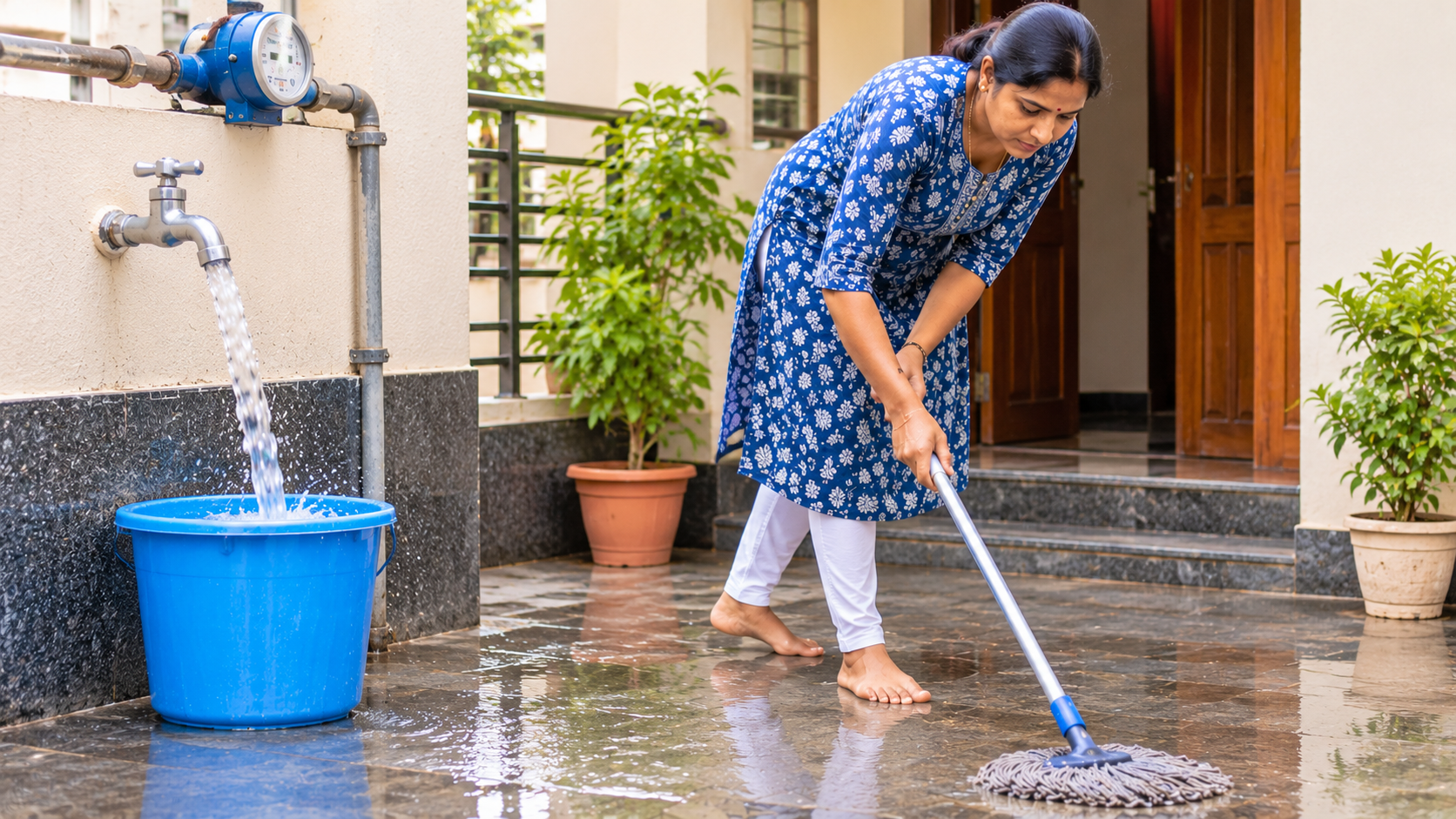
Municipal water management in southern India faces a unique civic challenge as digital monitoring platforms expose widespread daily resource waste among urban households. Data compiled from the official PAANI grievance application in Hyderabad indicates that using treated, potable water for routine floor mopping ranks as the most frequently reported domestic infraction. The findings illuminate a persistent disconnect between municipal conservation appeals and entrenched household sanitation habits in metropolitan apartments and independent homes.
Water utility boards have increasingly turned to digital crowd-sourcing to police resource allocation amid diminishing reservoir levels and erratic seasonal rainfall. While industrial and commercial water consumption undergoes rigorous metering, residential usage remains largely self-regulated, relying on civic consciousness rather than punitive enforcement. Neighborhood associations often find themselves mediating disputes as observant citizens utilize mobile applications to document neighbors washing vehicles or cleaning stairwells with high-grade drinking water during scarcity alerts.
The downstream impact of these digital disclosures includes a tightening of municipal oversight and the potential introduction of tiered tariff penalties for excessive residential consumption. Urban households face a cultural adjustment toward dry-cleaning floors or utilizing recycled greywater for domestic chores. Municipal authorities gain granular behavioral data, allowing them to target public awareness campaigns more effectively before summer deficits trigger severe supply rationing.
Comments 0