Punjab’s Security Fracture: A Senior Constable’s Targeted Killing by Tehreek-e-Taliban Hindustan
The discovery of Punjab Police head constable Vinod Kumar’s bullet-riddled body near Manakour bypass signals a significant escalation in the Tehreek-e-Taliban Hindustan’s campaign against law enforcement. This targeted assassination, the fifth since February, exposes the growing vulnerability of the state’s security apparatus in the face of a decentralized and increasingly bold insurgent network.
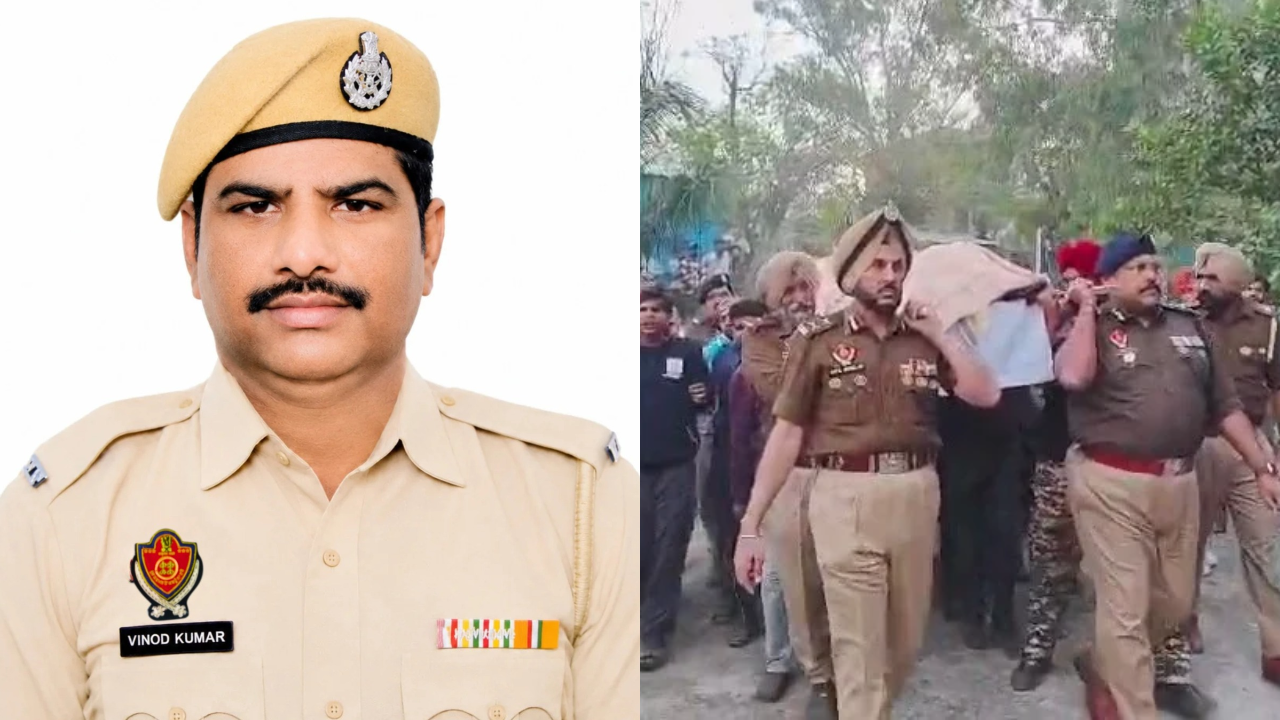
The concrete rupture was the targeted killing of Head Constable Vinod Kumar, whose body was found riddled with bullets near the Manakour bypass in Amritsar. The attack was claimed by Tehreek-e-Taliban Hindustan, a group that has been steadily expanding its operations in the region. This was not a random act of violence but a calculated strike against a senior police officer, indicating a shift in the group’s strategy from sporadic attacks to systematic decapitation of the security hierarchy. The presence of masked assailants, captured on CCTV, suggests a level of operational sophistication that challenges the state’s intelligence gathering capabilities.
The underlying tension stems from the persistent instability in Punjab, where the state’s ability to maintain a monopoly on force is being tested by a network that thrives on the region’s complex socio-political dynamics. The fact that this is the fifth killing of a police officer since February highlights a failure in the state’s preventive intelligence mechanisms. The institutional friction is evident in the gap between the police’s reactive posture and the proactive, coordinated nature of the attacks, which are designed to demoralize the force and undermine public confidence in the state’s ability to protect its own agents.
The downstream casualties include the families of the victims, who are left to navigate the trauma of losing a provider to a violent insurgency. More broadly, the incident threatens to destabilize the security environment in Punjab, potentially leading to a militarization of the region and a further erosion of civil liberties. The tangible outcome is a heightened state of alert that will likely result in increased surveillance and restrictions on movement, affecting the daily lives of millions of Punjabis who are caught in the crossfire of a conflict that shows no signs of abating.
Comments 0