RSS Chief Bhagwat Frames National Protests as External Regime Change Attempts
Mohan Bhagwat, the head of the Rashtriya Swayamsevak Sangh, has characterized recent domestic protests as orchestrated efforts to destabilize India, drawing parallels to political upheavals in France and Albania. This narrative seeks to consolidate internal support by framing dissent as a security threat rather than a legitimate political expression.
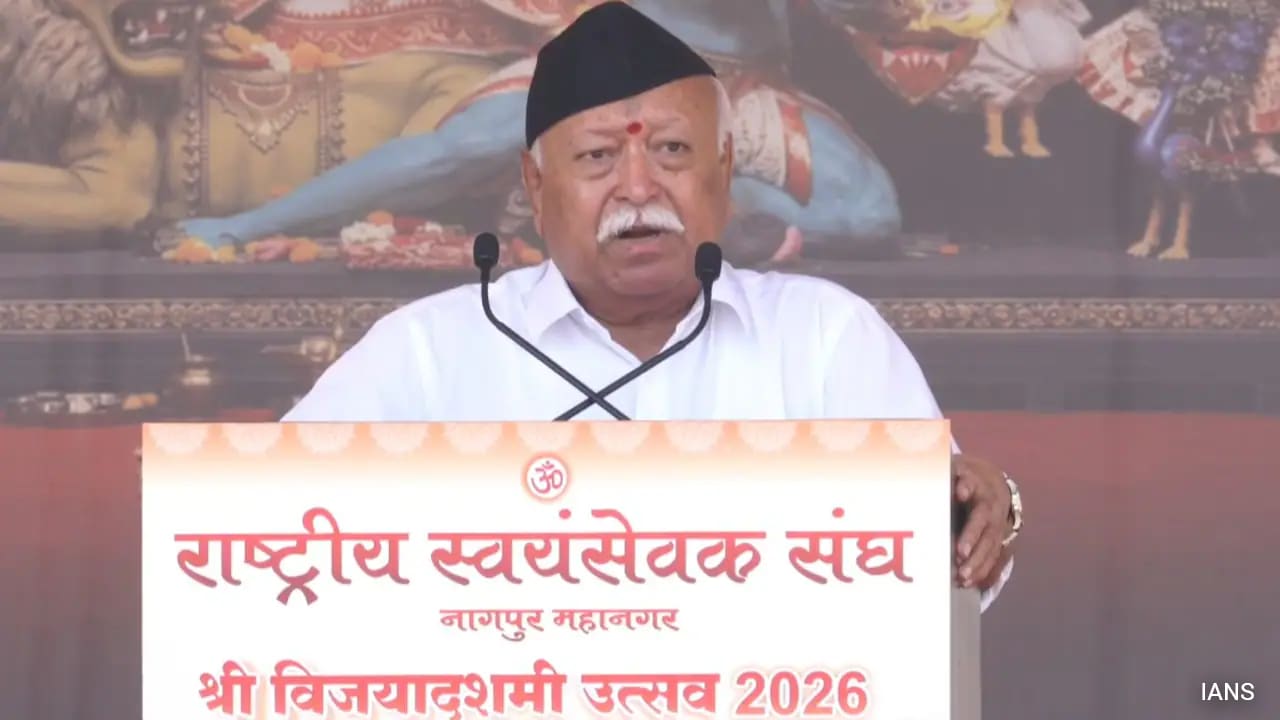
In a significant escalation of rhetoric, Mohan Bhagwat, the chief of the Rashtriya Swayamsevak Sangh, has moved to redefine the nature of political dissent in India. Speaking on the occasion of the organization's 101st foundation day, Bhagwat drew explicit parallels between domestic protests and the political instability witnessed in countries like France and Albania. By labeling these movements as attempts at 'regime change,' he has shifted the discourse from policy disagreement to national security, a framing that carries profound implications for how the state responds to civil unrest. This narrative positions the RSS not just as a cultural organization but as a bulwark against external and internal threats to the existing political order.
The institutional friction underlying this statement is evident in the growing tension between the state's authority and the organized opposition. Bhagwat's comments suggest a deep-seated belief that the current wave of protests is not organic but is being guided by external actors seeking to undermine India's stability. This perspective is likely to influence the actions of law enforcement and the judiciary, potentially leading to a more stringent interpretation of public order laws. The RSS's influence on the ruling party's policy decisions means that this narrative will not remain confined to the organization's internal circles but will permeate the broader political discourse, affecting how dissent is perceived and managed.
The tangible outcome of this framing is a chilling effect on political opposition and civil society. By associating protests with foreign interference, the state gains a pretext to monitor and restrict activities that it deems subversive. This could lead to a narrowing of the space for legitimate political debate and a consolidation of power within the existing ruling structure. The downstream casualties of this narrative are the citizens who exercise their right to protest, who may now face heightened scrutiny and legal challenges. The long-term consequence is a more polarized society where political disagreement is viewed through the lens of loyalty and security, rather than as a normal part of democratic life.
Comments 0