Sabarimala's Mandala Season Opens Under Strict Crowd Curbs
The Sabarimala temple has opened for the Mandala-Makaravilakku season with a firm daily ceiling of 80,000 pilgrims. This enhanced crowd management protocol reflects a growing tension between religious fervor and administrative control over large-scale gatherings.
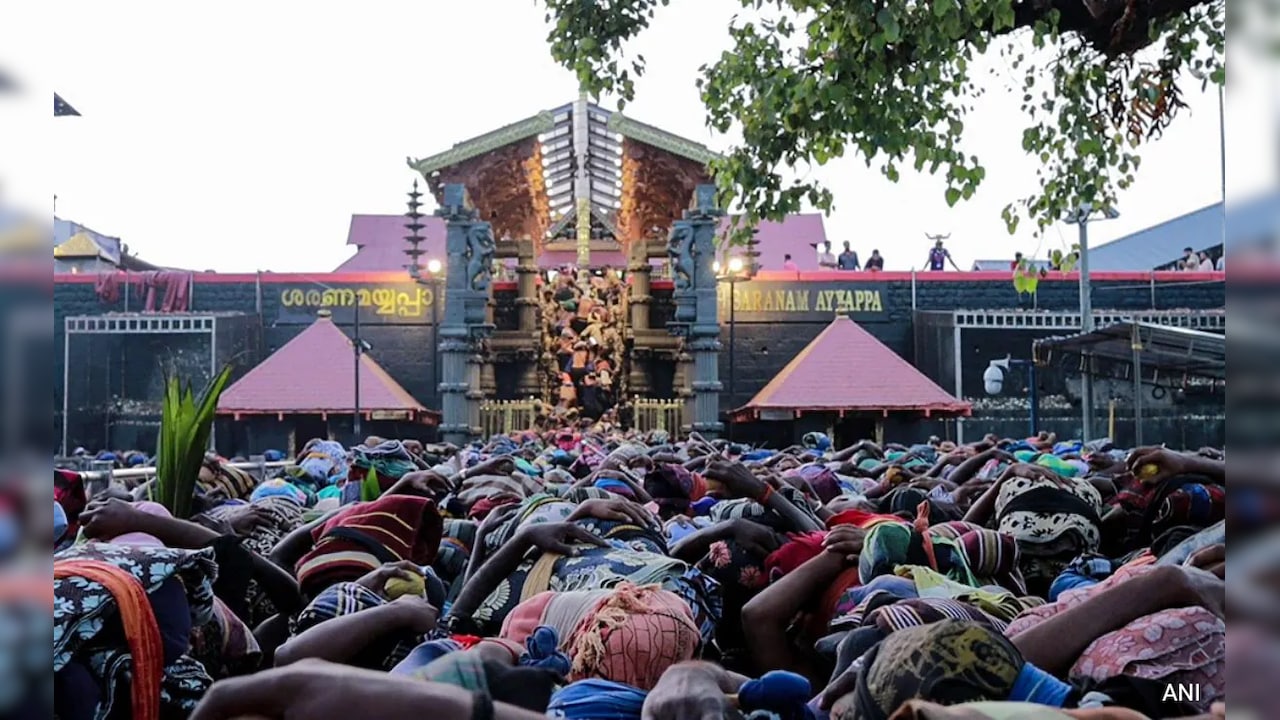
The opening of the Sabarimala temple for the Mandala-Makaravilakku season marks a significant moment in the management of one of India's most contested religious sites. The administration has imposed a strict daily limit of 80,000 pilgrims, a measure designed to enhance crowd management and ensure safety. This decision is not merely logistical but a direct response to the sheer scale of devotion that has, in previous years, strained local infrastructure and raised security concerns. The concrete rupture here is the formalization of a cap on access, transforming a traditionally open religious gathering into a regulated event with defined boundaries.
The underlying tension involves the complex interplay between religious rights, state security, and public health. Sabarimala has long been a flashpoint for social and political debate, with issues ranging from gender access to the environmental impact of massive crowds. The imposition of strict curbs reflects an institutional friction between the desire to accommodate millions of devotees and the practical limitations of the site's capacity. This friction is exacerbated by the political sensitivity of the temple, where any perceived restriction on access can be framed as an infringement on religious freedom, while any failure to manage crowds can be seen as a dereliction of duty by the state.
The downstream consequences of these curbs are . For pilgrims, the daily ceiling may lead to longer waits and increased competition for entry, potentially altering the traditional rhythm of the pilgrimage. For the local economy, the controlled flow of visitors may stabilize revenue streams but also limit the peak-time economic surge that the region typically experiences. The tangible outcome is a more managed, albeit less spontaneous, religious experience, where the state's role as a regulator becomes more visible and, consequently, more subject to public scrutiny and debate.
Comments 0