Shadow Monetary Panel Urges Status Quo Amid Inflationary Pressures
The Pune-based GIPE shadow monetary policy committee has advised the central bank to maintain current interest rates due to partial rate transmission and rising food prices. This fiscal stance highlights persistent friction between macroeconomic targets and ground-level inflationary realities.
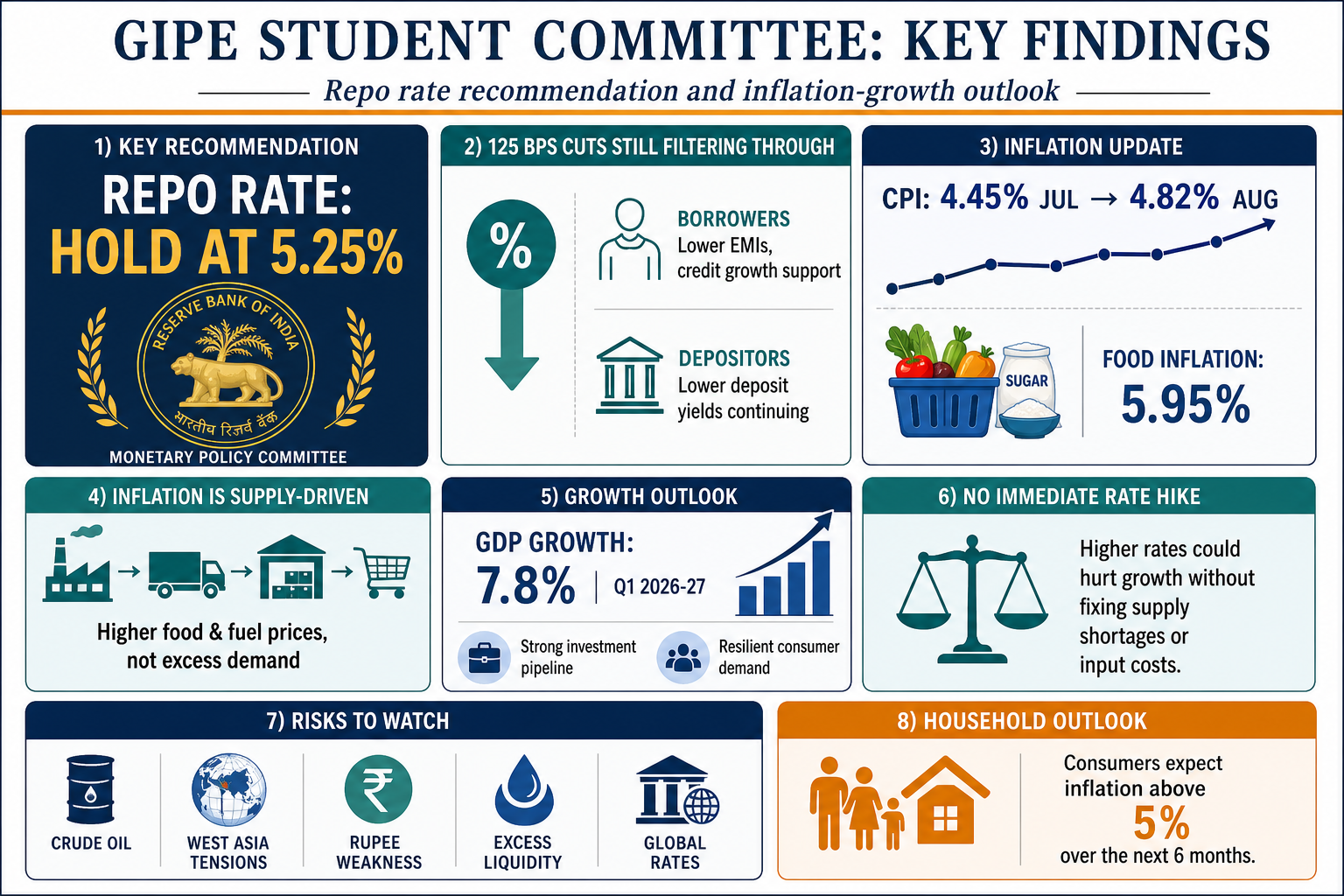
Economic analysts gathering under the GIPE shadow panel framework noted that previous monetary easing measures have failed to adequately permeate commercial lending rates. With the cost of essential food items and petroleum products climbing steadily, the panel argued that premature rate cuts would risk stoking inflation rather than stimulating productive investment. The assessment provides a sobering counterweight to optimistic projections from commercial lenders eager for cheaper capital. Financial institutions currently find themselves caught between corporate demands for liquidity and central bank mandates to anchor price stability. While urban credit growth remains robust, rural demand exhibits fatigue driven by erratic weather and elevated input costs. The incomplete transmission of past repo rate reductions underscores structural rigidities within India's banking sector, where asset-liability mismatches discourage banks from fully lowering borrowing costs for consumers. If the central bank heeds the shadow panel's caution, borrowers must prepare for sustained high-cost credit environments through the fiscal year. Small and medium enterprises, which rely heavily on floating-rate loans, will bear the brunt of delayed monetary relief, potentially dampening industrial expansion outside major metropolitan hubs. Savers, conversely, will continue to benefit from positive real returns on fixed deposits.
Comments 0