Shahed Drone Threat Spurs Development of Rocket‑Powered Interceptors
The emergence of fast‑flying Shahed drones has prompted a defense firm to pursue rocket‑ and jet‑powered interceptor prototypes. The initiative signals a shift in aerial defense strategy amid evolving unmanned threats.
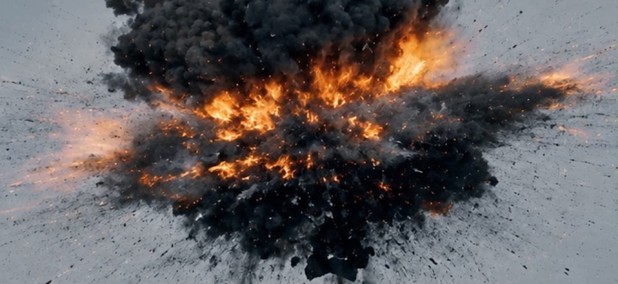
Recent encounters with Shahed‑type drones, noted for their speed and low‑observable profile, have exposed gaps in existing air‑defence architectures, prompting Powerus, a drone‑technology enterprise, to announce plans for a new class of interceptors. These systems are envisioned to employ either rocket propulsion or miniature jet engines, enabling rapid climb rates and extended engagement envelopes. The company’s research and development team cites the need for a platform capable of neutralizing swarms before they can penetrate critical airspace, a capability that traditional surface‑to‑air missiles struggle to provide.
The strategic impetus behind this move reflects broader concerns among national militaries about the proliferation of inexpensive, yet highly maneuverable, unmanned aerial vehicles. Defense analysts argue that the cost‑to‑kill disparity is widening, with adversaries fielding low‑cost drones against high‑value interceptor assets. Consequently, there is mounting pressure on defense contractors to innovate cost‑effective solutions that can be deployed in large numbers without exhausting defense budgets. The proposed interceptors aim to fill this niche, offering a scalable response to the evolving threat .
If successful, the new interceptor line could reshape procurement priorities for armed forces worldwide, encouraging a transition toward layered air‑defence networks that integrate kinetic and electronic countermeasures. Anticipated contracts with several governments may accelerate production timelines, while the technology could also find applications in protecting critical infrastructure such as power plants and ports. The ripple effect may spur further research into autonomous targeting algorithms and rapid‑launch launchers, reinforcing a broader shift toward adaptable, high‑tempo defence postures.
Comments 0