Silicon Valley's Classroom Incursion: The Question of Tech's Educational Grip
The growing influence of Big Tech in classroom settings is prompting parents to question the motives behind Silicon Valley's expanding role in education. This trend raises concerns about data privacy, algorithmic bias, and the commercialization of the learning process.
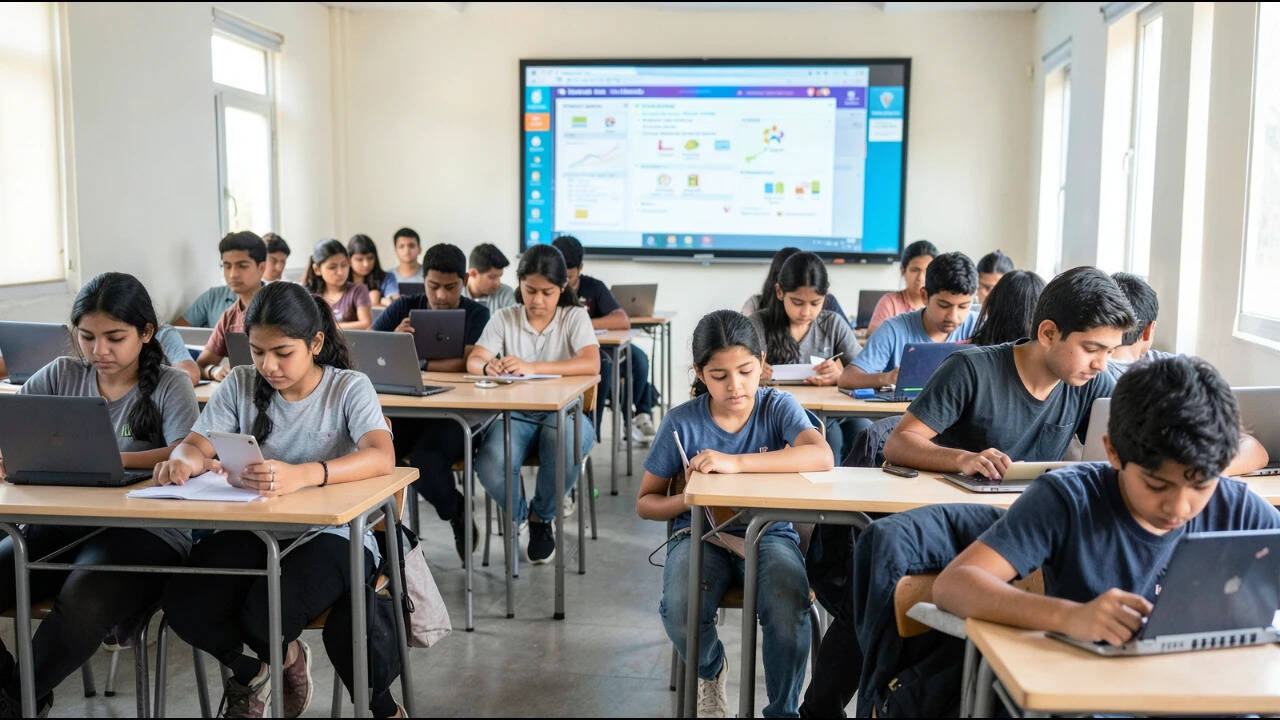
The integration of technology into education has reached a point where the influence of Silicon Valley is no longer just a tool but a dominant force shaping the pedagogical . Parents and educators are increasingly questioning the motives behind this expansion, wondering if the primary goal is to enhance learning or to harvest data and create new markets. The presence of major tech companies in classrooms is a double-edged sword, offering personalized learning experiences while also raising significant concerns about privacy and the potential for algorithmic bias. This is not just a debate about technology; it is a debate about the values that underpin the education system and the role that private corporations should play in shaping the minds of the next generation.
The underlying tension is rooted in the fundamental difference between the profit-driven model of the tech industry and the public service mission of education. Tech companies are incentivized to maximize engagement and data collection, which may not always align with the best interests of students. This misalignment can lead to a curriculum that is optimized for data generation rather than critical thinking and deep understanding. The institutional friction is evident in the way schools are increasingly dependent on these platforms, creating a situation where the private sector has significant leverage over the public education system. This dependency is a source of concern for educators who fear that the educational process is being subordinated to commercial interests.
The downstream consequences of this trend are already visible in the way students are interacting with information and technology. There is a risk that students are being trained to be consumers of technology rather than critical users, a skill set that is less valuable in a rapidly changing job market. The tangible outcome of this shift will be a generation that is highly proficient in using digital tools but potentially less equipped to question the systems that govern their lives. This has implications for the future of democracy and civic engagement, as the ability to critically evaluate information is a cornerstone of an informed electorate. The challenge for educators and policymakers is to strike a balance between leveraging the benefits of technology and safeguarding the integrity of the educational process.
Comments 0