Supreme Court Intervenes in Thiruparankundram Hill Ritual Dispute
The Supreme Court of India stayed a Madras High Court judgment, granting permission for the traditional Karthigai lamp lighting at Deepathoon as a one-time measure. The interim order seeks to preserve local communal stability while legal ownership and religious custom arguments undergo thorough judicial review.
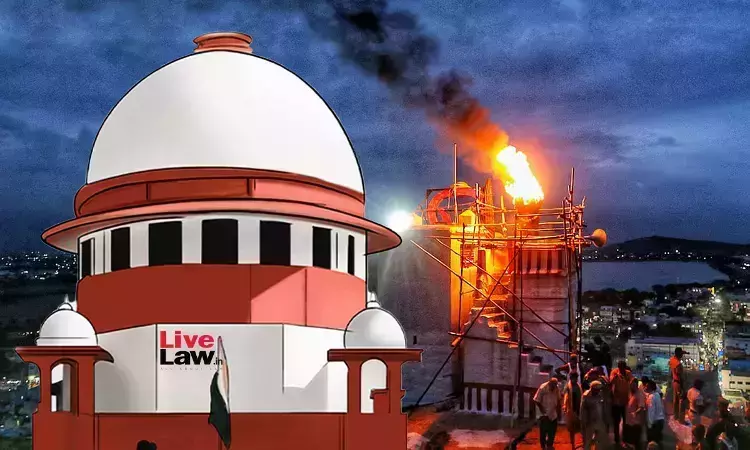
The Supreme Court of India issued an interim order staying a judgment of the Madras High Court concerning the ceremonial lighting of the Karthigai lamp at Deepathoon on Thiruparankundram Hill. The apex court permitted the ritual to proceed on November 24 strictly as a one-time measure, establishing legal safeguards to prevent public order disruptions during the event. By intervening at a critical juncture, the highest court paused the immediate execution of lower court mandates that had raised heightened communal sensitivity and security concerns across Tamil Nadu.
The legal friction stems from competing historical claims over access rights and traditional religious observances at the disputed site. The Madras High Court had previously issued directives that fundamentally altered long-standing administrative protocols governing the hill, prompting urgent appeals from regional stakeholders concerned about public tranquility. The Supreme Court emphasized that judicial orders in sensitive socio-religious matters must balance historical custom with contemporary public order management. The temporary stay provides an administrative cooling-off period while constitutional and evidentiary arguments are evaluated in depth.
This interim ruling returns immediate administrative control to district law enforcement and municipal authorities tasked with managing large seasonal gatherings. State law enforcement agencies are implementing heightened security cordons around Thiruparankundram Hill to enforce the specific conditions outlined by the court. The outcome reinforces the supreme judiciary role as a stabilizing mediator in complex local heritage disputes. The ultimate resolution of the petition will set an important precedent for judicial management of shared cultural and religious monuments across the nation.
Comments 0