Supreme Court Petition Challenges Anandamath Patriotic Song Mandates
A retired senior bureaucrat has petitioned India apex court, asserting that the official elevation of verses from Anandamath violates constitutional guarantees of secularism. The legal challenge reopens historic debates concerning state neutrality, religious nationalism, and individual freedom of conscience.
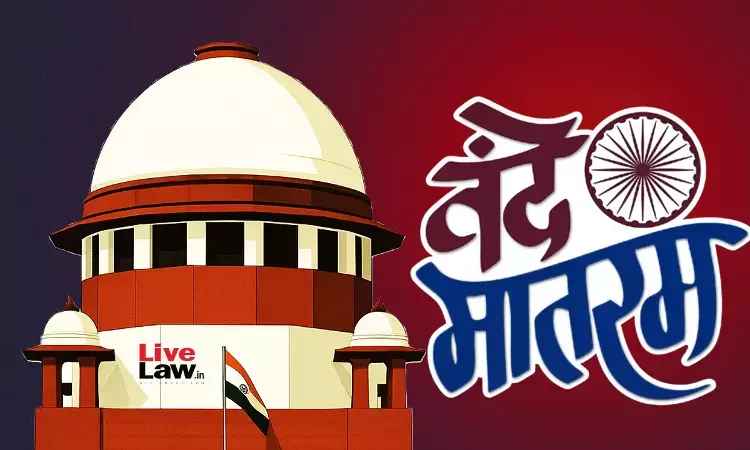
A retired senior civil servant belonging to a Scheduled Caste community has filed a public interest petition in the Supreme Court of India, challenging the state enforced recitation of patriotic verses drawn from Bankim Chandra Chattopadhyay historic novel Anandamath. The petitioner asserts that the composition contains explicit religious martial imagery that transforms a civic national song into a partisan declaration, arguing that forcing citizens to perform or venerate such compositions infringes upon fundamental rights to freedom of conscience and religion guaranteed under the Indian Constitution.
The legal challenge strikes at the heart of long standing constitutional debates regarding the boundaries of state sponsored nationalism and secular public life. The petitioner contends that while national identity requires shared constitutional symbols, elevating nineteenth century literary works with explicit sectarian undertones creates institutional coercion against religious and social minorities. Administrative authorities have historically defended the use of such patriotic literature as essential to historical memory and national integration, arguing that artistic expressions from the independence movement possess a universal civic character above doctrine.
The Supreme Court decision to review the petition introduces significant legal uncertainty into public educational institutions and state ceremonies where patriotic recitations are mandated. A ruling in favor of the petitioner could alter municipal regulations, public school curricula, and official protocols nationwide, reinforcing strict constitutional boundaries against state mandated religious expression. Conversely, a dismissal would solidify the administrative authority to deploy traditional literary symbols in defining public nationalism, deepening ideological divisions across the nation civil society.
Comments 0