Supreme Court Scrutinizes Delhi Police Denotification of Jantar Mantar
The Supreme Court of India has issued a notice to the Delhi Police, questioning the rationale behind the denotification of Jantar Mantar as a protest site. This judicial intervention highlights the ongoing tension between public order and the right to peaceful assembly.
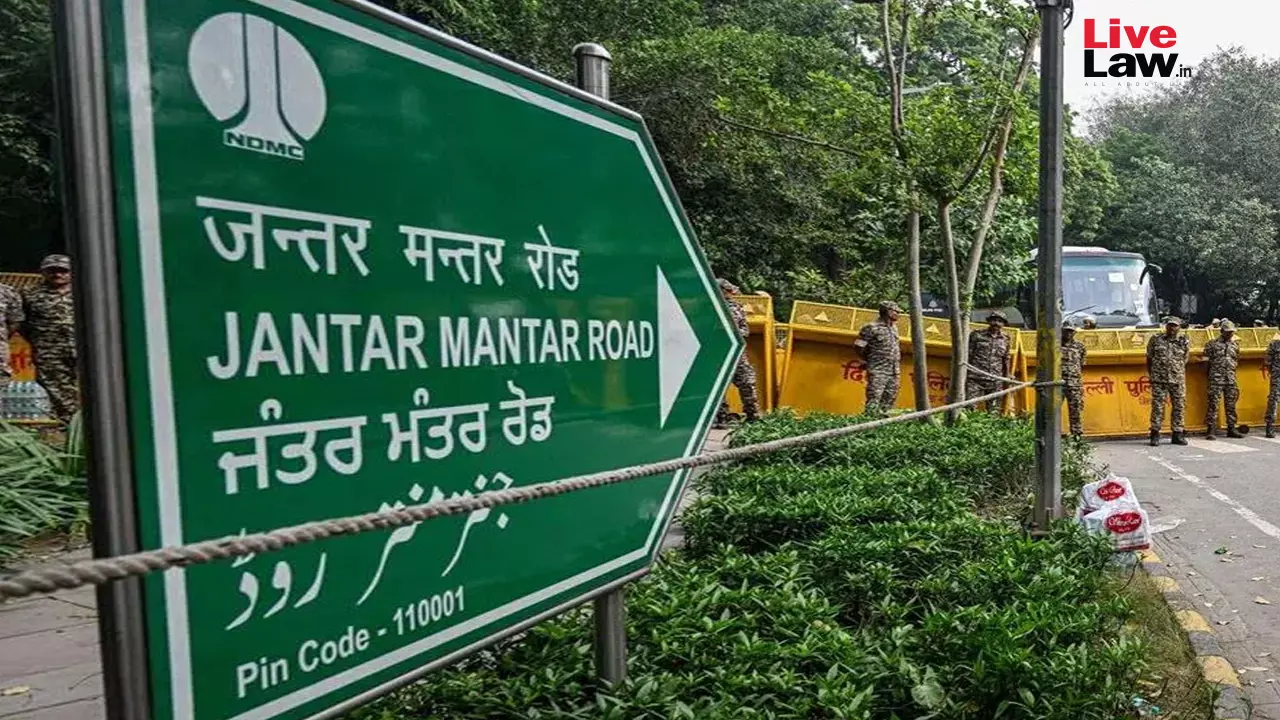
The Supreme Court's decision to examine the Delhi Police's decision to denotify Jantar Mantar as a protest site represents a significant legal and political development. The court's notice to the police forces a public scrutiny of the administrative actions taken to restrict a historically significant space for dissent. The immediate impact is a reinforcement of the judiciary's role as a check on executive power, particularly in matters concerning civil liberties. The move signals that the court will not passively accept administrative decisions that may infringe upon fundamental rights without rigorous justification.
The underlying tension stems from the competing interests of maintaining public order and protecting the right to protest. The Delhi Police has cited concerns about safety and security as reasons for the denotification, but critics argue that this is a pretext to silence dissent. The institutional friction is evident in the differing interpretations of the law, with the police emphasizing their duty to prevent disruption and the court focusing on the constitutional guarantee of free speech. This conflict reflects a broader societal debate about the limits of state power in a democracy.
The downstream consequences of this legal battle will shape the future of protest in India. If the court rules in favor of the protesters, it will set a precedent that strengthens the right to peaceful assembly. Conversely, if the police's actions are upheld, it may embolden other authorities to restrict protest spaces. The tangible outcome will be a clearer legal framework for public demonstrations, which will influence how citizens engage with the state. The 12-month structural consequence will be a more defined boundary between state authority and individual rights, potentially leading to a more or more constrained public sphere.
Comments 0