Supreme Court Scrutinizes ED's Challenge to NewsClick Quashing
The Supreme Court has issued a notice to the Enforcement Directorate regarding its plea against the Delhi High Court's decision to quash a case against NewsClick and its editor. The judicial scrutiny signals a potential check on the agency's expansive use of foreign exchange laws in matters of press freedom and political dissent.
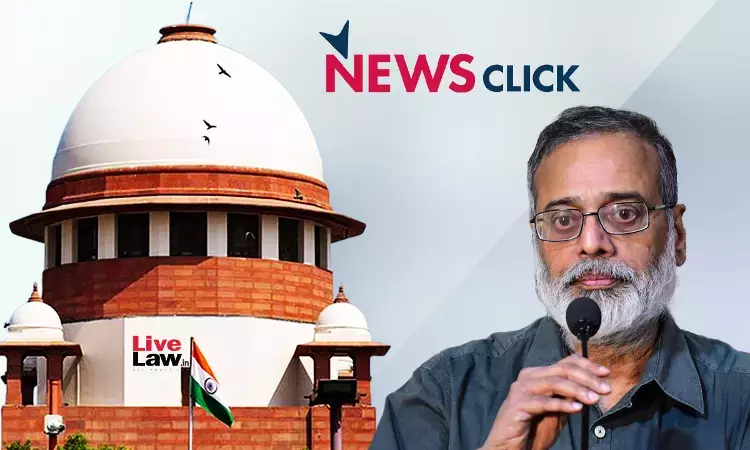
The concrete rupture in the legal is the Supreme Court's decision to take up the Enforcement Directorate's special leave petition. The ED had challenged the Delhi High Court's order that quashed a case registered against NewsClick and its editor, Prabir Purkayastha, alleging violations of the Foreign Exchange Management Act. This is not a routine procedural matter; it is a direct confrontation between the executive's enforcement arm and the judiciary's protection of press freedom. The notice issued by the Supreme Court, with Justice Joymalya Bagchi noting a lack of impression with the ED's plea, suggests that the apex court is preparing to intervene in a case that has become a symbol of the tension between state power and media independence. The immediate shockwave is a chilling effect on investigative journalism, as the outcome of this case will set a precedent for how foreign funding allegations can be used against media houses.
The underlying tension is the institutional friction between the ED's mandate to enforce financial laws and the broader constitutional guarantee of free speech. The ED's use of the FEMA in this context has been widely criticized as an overreach, turning financial regulations into a tool for political silencing. The Delhi High Court's quashing of the case was a bold move, asserting that the agency's actions were not supported by the law. The Supreme Court's intervention now places the entire matter under the highest judicial scrutiny, forcing the ED to justify its actions before the nation's highest court. This friction is not just legal but political, as the case involves a media outlet that has been critical of the government. The institutional challenge for the ED is to demonstrate that its actions were lawful and necessary, while the media industry watches closely for any sign of judicial support.
The downstream casualties of this legal battle are the journalists and media outlets that rely on foreign funding to operate. If the Supreme Court upholds the ED's challenge, it could open the door for similar actions against other media houses, leading to a self-censorship that would degrade the quality of public discourse. The tangible outcome of a favorable ruling for the media would be a reinforcement of the legal protections for press freedom, while a ruling against them would be a significant blow to the independence of the press. The winners in this scenario are those who can navigate the legal complexities, but the casualties are the public's right to a free and independent press. The structural consequence is a potential redefinition of the boundaries of press freedom in India, with implications for the entire media ecosystem.
Comments 0