Tamil Nadu Moves Supreme Court in Legal Battle Over Karthigai Lamp Lighting at Thiruparankundram Deepathoon
The Tamil Nadu government has filed a review petition challenging a Supreme Court directive that permits the lighting of lamps at the Thiruparankundram Deepathoon. This legal escalation deepens the friction between religious observance mandates and state administrative jurisdiction.
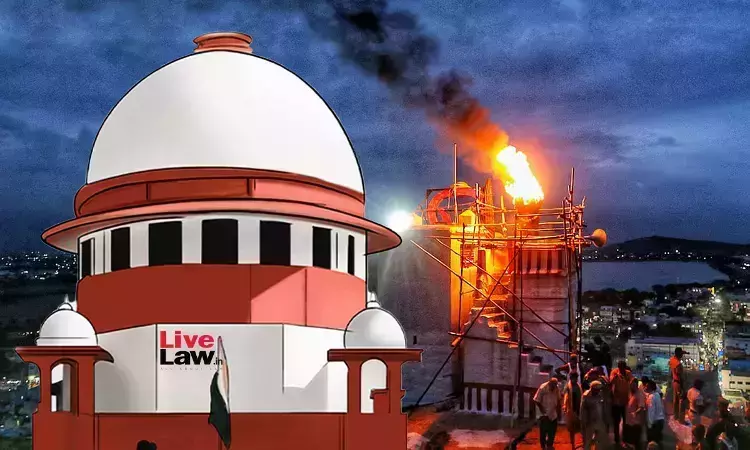
The legal confrontation surrounding the sacred hill of Thiruparankundram in Madurai escalated significantly as the Tamil Nadu government formally petitioned the Supreme Court for a review of its earlier order. The original judicial directive had cleared the path for the traditional lighting of the Karthigai lamp at the disputed Deepathoon site, overriding local executive cautions regarding public order. This administrative challenge underscores the deep anxieties harbored by state authorities regarding the delicate equilibrium of public spaces shared by distinct religious communities in southern India.
At the heart of this controversy lies a fundamental clash between traditional religious practices and the regulatory powers of secular state machinery. Local administrators frequently find themselves caught between judicial mandates upholding constitutional rights of worship and the immediate operational realities of maintaining communal harmony on the ground. By pursuing a review petition, the state government is attempting to reassert its executive prerogative in managing local law and order, signaling that judicial interventions in sensitive regional rituals carry heavy administrative burdens.
The downstream consequence of this legal tussle extends far beyond the immediate temple precincts, establishing a critical precedent for how religious traditions intersect with state governance in Tamil Nadu. The winners of this judicial round are petitioners seeking unhindered religious expression, whereas the institutional casualty is the discretionary authority of local civil servants. As the Supreme Court weighs the review arguments, the case remains a litmus test for federalism and the limits of judicial oversight in localized cultural disputes.
Comments 0