The Currency Paradox: Why Record Foreign Exchange Reserves Fail to Insulate the Indian Rupee
Despite accumulating historic foreign exchange reserves, the Indian rupee continues to hover near multi-month lows against the US dollar. Persistent structural trade deficits and volatile foreign capital outflows undermine the central bank's defensive interventions in the forex market.
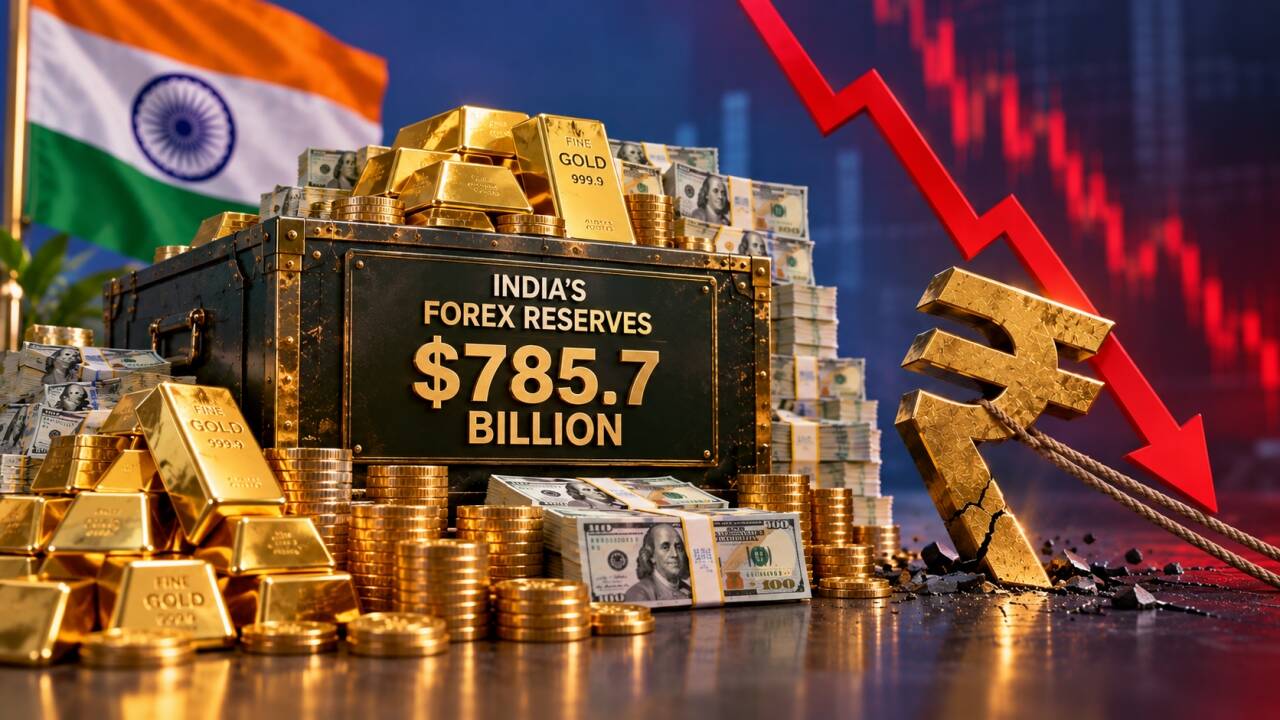
The Reserve Bank of India sits atop a formidable chest of foreign exchange reserves, a financial fortress traditionally viewed as an impenetrable shield against external currency shocks. Yet, the domestic currency remains stubbornly vulnerable, testing the lower bounds of valuation against the greenback as traders assess macroeconomic fundamentals. This enduring weakness persists despite aggressive monetary management and frequent central bank liquidity interventions designed to smooth out sharp deprecation trajectories. At the heart of this vulnerability lies a persistent structural imbalance in India's external accounts, where robust capital inflows are frequently offset by widening trade imbalances and global commodity price fluctuations. Foreign institutional investors continue to reallocate capital toward higher-yielding developed markets in response to shifting global interest rate expectations. Consequently, the sheer volume of reserves tells only half the story; market sentiment and real-time capital flight dictate the daily pricing of the rupee with unforgiving precision. For domestic importers, the continued softness of the currency translates directly into imported inflation, raising the landed cost of crude oil, electronics, and industrial raw materials. Export-oriented sectors experience a temporary competitive cushion, but the broader macroeconomic toll includes higher domestic borrowing costs as monetary authorities guard against imported price pressures. Ultimately, reserve accumulation functions as a shock absorber rather than an absolute cure, leaving the national currency exposed to the shifting winds of global liquidity.
Comments 0