The Judicial Reckoning: Contempt Petition Challenges Metro Closures in Defiance of Court Orders
A contempt petition has been filed in the Supreme Court alleging that arbitrary metro station closures and train cancellations violate existing judicial directives. This legal escalation exposes a deepening institutional friction between executive transport authorities and the judiciary's mandate for public accountability.
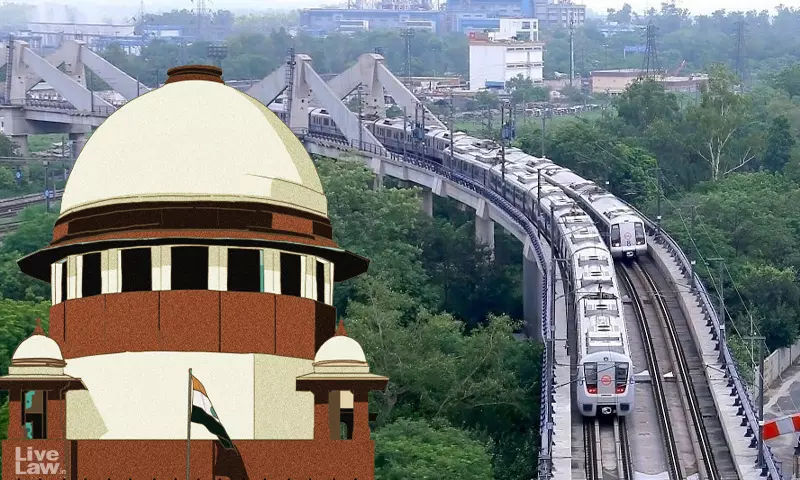
The Supreme Court has been presented with a contempt petition that alleges the arbitrary closure of metro stations and the cancellation of train services in direct violation of prior court orders. This legal filing represents a sharp rupture in the relationship between the executive branch, which manages urban transit, and the judiciary, which has sought to ensure that public infrastructure remains accessible and that operational decisions are not made in secrecy. The petitioners argue that the disruptions are not merely logistical inconveniences but deliberate acts of administrative overreach that undermine the rule of law in the capital's most critical transport corridors.
The underlying tension stems from a persistent friction between the need for rapid, unilateral decision-making by transport authorities and the judicial insistence on procedural fairness and transparency. For months, commuters and legal advocates have noted a pattern of closures that appear to serve political or security objectives without the requisite public justification or adherence to the timelines set by the court. This institutional standoff highlights a broader challenge in Indian governance, where the executive often views judicial oversight as an impediment to operational efficiency, while the judiciary perceives such autonomy as a threat to the fundamental rights of citizens to move freely and access public services.
The downstream consequences of this legal battle extend far beyond the immediate inconvenience to commuters. If the court upholds the contempt petition, it could lead to significant penalties for the transport authorities and a mandatory restructuring of their decision-making processes, potentially slowing down future operational changes. For the public, the outcome will determine whether the metro system remains a reliable pillar of urban mobility or becomes a tool of administrative control. The stakes are high, as the ruling will set a precedent for how judicial orders are to be enforced in the management of critical national infrastructure, with tangible impacts on daily life and economic productivity in the capital region.
Comments 0