The Supreme Court's Ruling on Protest and the State's Persistent Detentions
The Supreme Court of India issued a clear directive to refrain from detaining peaceful protesters, yet hundreds were still taken into custody on the second day of demonstrations. This divergence between judicial pronouncement and executive action highlights a deepening institutional friction regarding civil liberties.
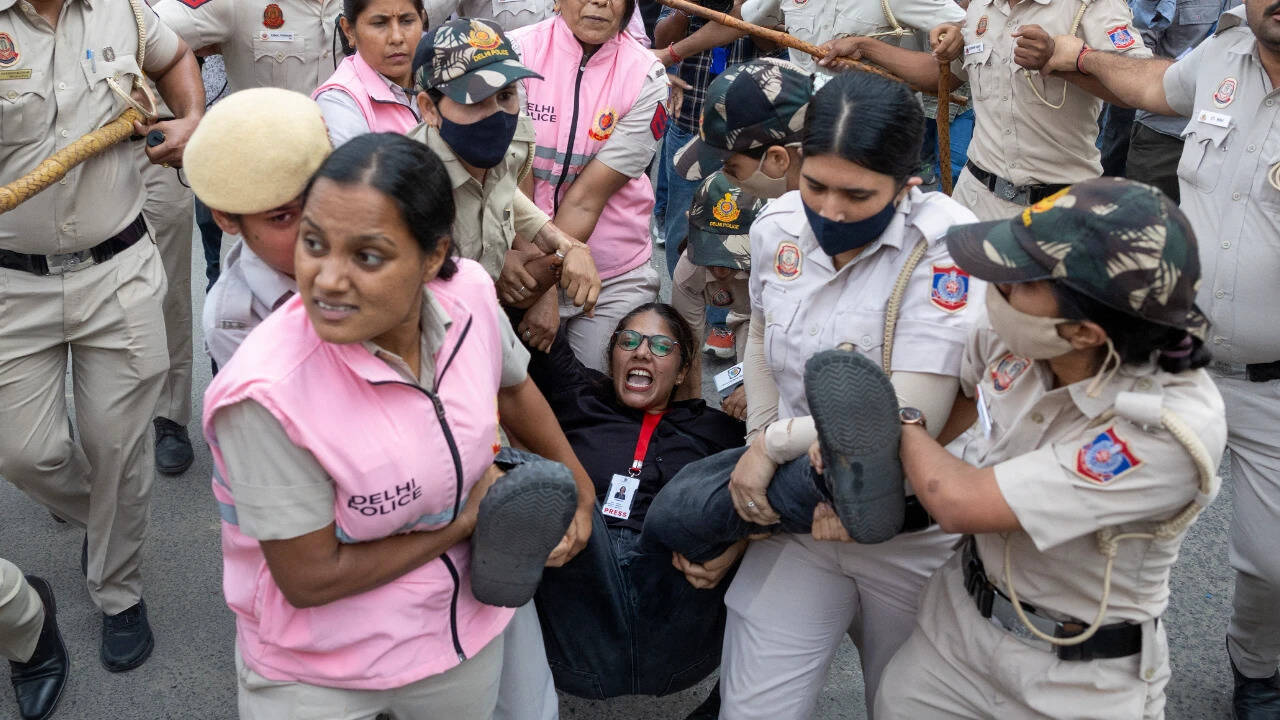
The concrete rupture occurred as the apex court's order to protect the right to peaceful assembly collided with the ground reality of mass arrests. Despite the judicial mandate, law enforcement agencies continued to detain hundreds of individuals, creating a scene of legal contradiction. The immediate shockwave was a visible clash between the judiciary's protective stance and the state's aggressive approach to public order, leaving citizens in a state of uncertainty about their fundamental rights.
The underlying tension stems from a long-standing friction between the executive branch and the judiciary over the definition of peaceful protest. The state often cites public safety and order as justifications for preemptive detentions, while the court emphasizes the constitutional guarantee of free expression. This institutional standoff is not merely procedural; it reflects a broader struggle over the boundaries of state power and the limits of judicial oversight in a democratic framework.
The downstream casualties are the protesters themselves, who face the risk of prolonged detention and legal harassment, and the public trust in the rule of law. The tangible outcome is a chilling effect on dissent, where the fear of arbitrary arrest may suppress legitimate political expression. This incident sets a precedent that could either reinforce judicial authority or embolden executive overreach, with significant implications for future civil unrest.
Comments 0