Tragedy Above the Urban Sprawl: The Los Angeles Helicopter Disaster
Three individuals lost their lives when a news gathering helicopter plummeted during coverage of a vehicular collision in Los Angeles. The sudden catastrophe triggered immediate inquiries into the safety protocols governing low altitude media operations over dense metropolitan zones.
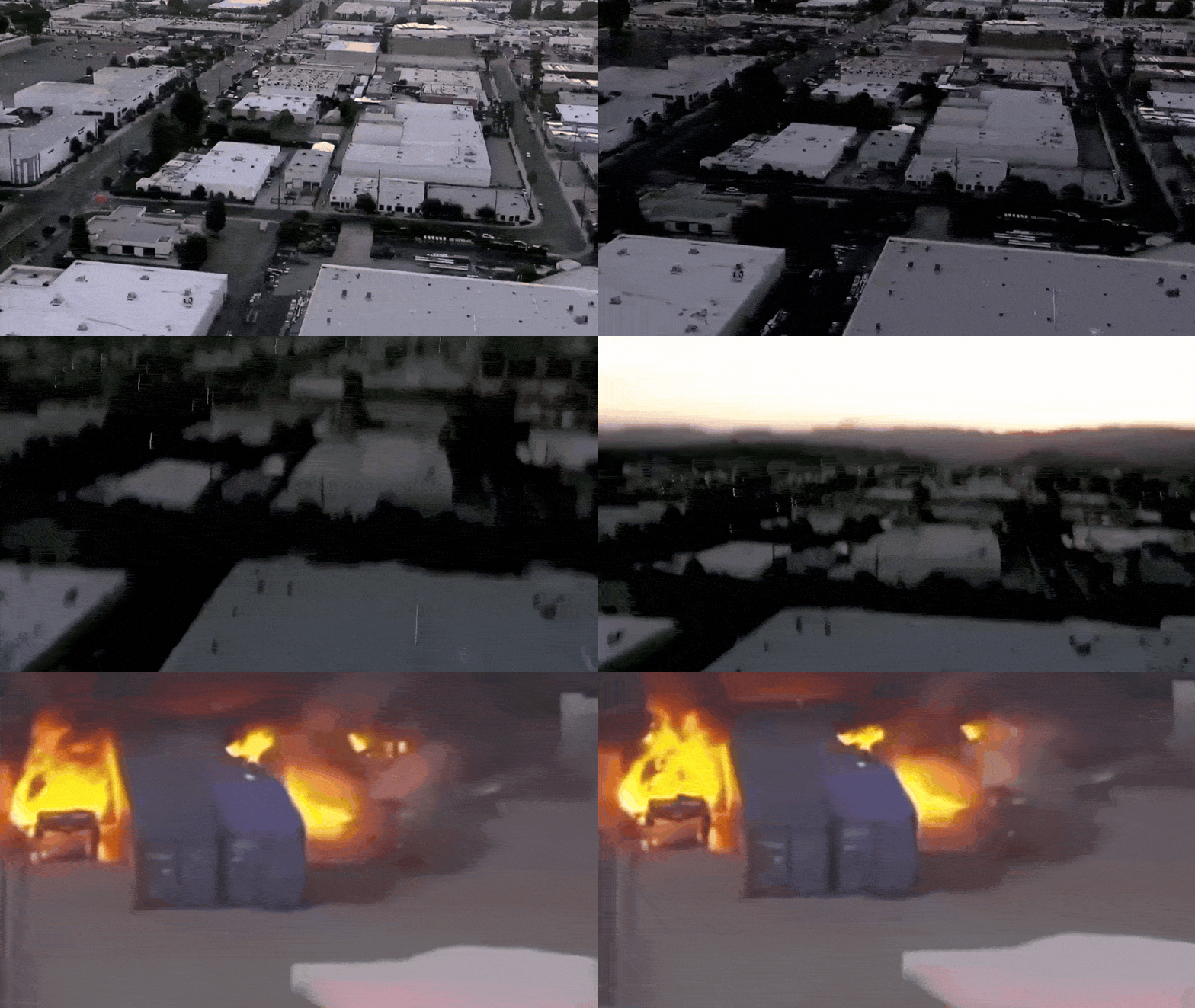
The morning skies above Los Angeles turned lethal when a rotorcraft covering a highway bus collision experienced catastrophic mechanical failure and spiralled violently into the ground. Onboard personnel perished instantly, transforming a routine news assignment into a scene of utter devastation. Emergency responders converged rapidly on the wreckage, sealing off the arterial roadways while federal aviation authorities initiated on-site investigations to piece together the final seconds of the flight. This disaster exposes the escalating hazards associated with saturated airspace above major urban centers where news organizations compete for real-time aerial footage. For years, critics have warned that the pressure to capture immediate visual spectacles compromises basic flight safety margins. Commercial news gathering fleets often operate under intense temporal constraints, pushing pilots and equipment to the limits while navigating complex urban wind patterns and congested flight corridors. Immediate regulatory scrutiny will likely constrain live aerial broadcasting permits across municipal jurisdictions, forcing media outlets to rely more heavily on ground-based remote cameras and unmanned drones. The human cost of this incident serves as a grim indictment of sensationalist reporting practices that prioritize live visual drama over crew safety. Families of the victims face prolonged legal battles against network operators, while the broader broadcasting industry reckons with the ethical boundaries of modern news production.
Comments 0