Trilateral Summit in Shenzhen Raises Stakes for Global Security
The first three‑way dialogue between the United States, China and Russia convened on the sidelines of the APEC summit, drawing immediate scrutiny from defence analysts worldwide. The gathering ignited a cascade of diplomatic posturing that could reshape nuclear deterrence calculations across continents.
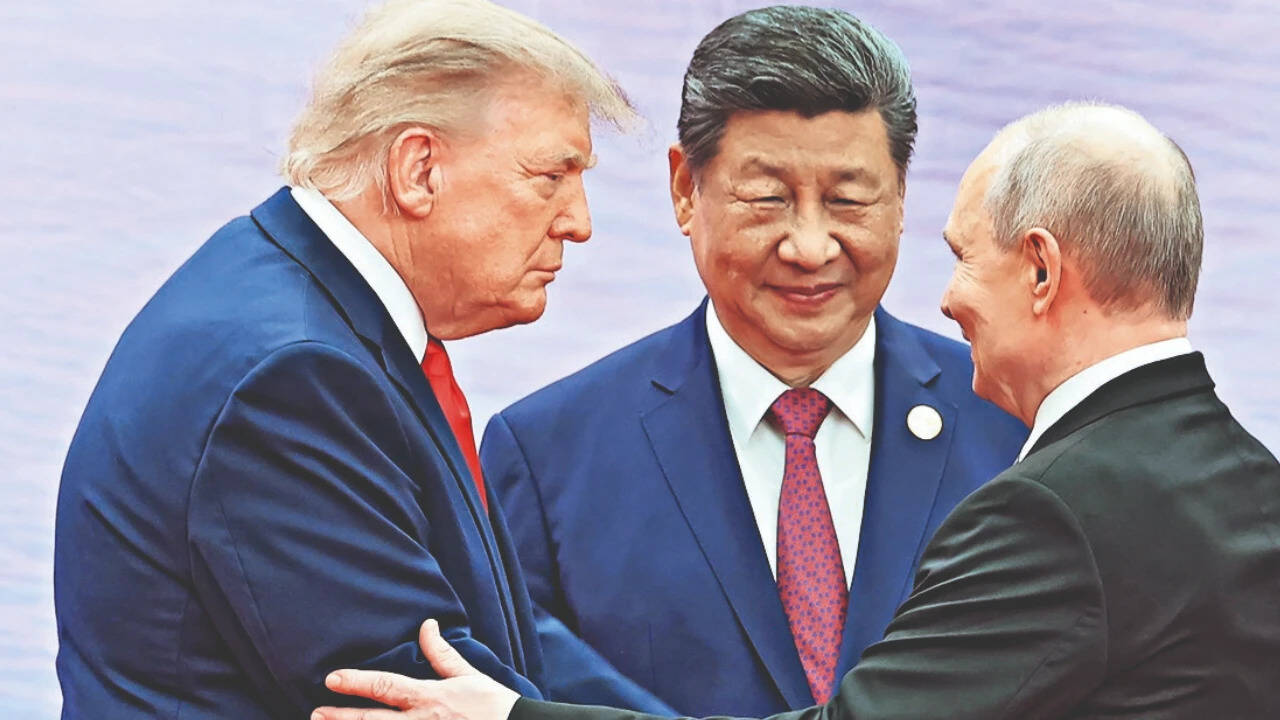
The concrete rupture of diplomatic protocol occurred when President Donald Trump, President Xi Jinping and President Vladimir Putin assembled in Shenzhen for a historic three‑way meeting. Their joint appearance, unprecedented since the Cold War, signaled a willingness to confront shared security dilemmas, from nuclear arms control to regional conflicts in Eastern Europe and the Indo‑Pacific. The summit agenda, though not fully disclosed, centered on establishing communication channels that could avert accidental escalation, a move that instantly altered the calculus of allied and adversarial ministries of defence.
Underlying tension surfaced as each leader entered the talks bearing the weight of recent confrontations: the United States' renewed focus on Taiwan, China's assertive posture in the South China Sea, and Russia's ongoing war in Ukraine. Long‑standing mistrust among the three powers manifested in cautious language, with each side demanding reciprocal concessions while guarding core strategic interests. Institutional friction was evident in the parallel negotiations among their foreign ministries, intelligence services and military establishments, each vying to extract maximal advantage from the limited window of dialogue.
The downstream casualties of this summit may include a renewed arms race, as rival blocs interpret any perceived softening as an invitation to expand arsenals. NATO members are likely to accelerate defence spending, while Asian allies may seek stronger security guarantees from Washington. In the next twelve months, the summit could catalyse a realignment of diplomatic ties, prompting a shift in global non‑proliferation efforts and reshaping the strategic balance across multiple theatres.
Comments 0