Trump’s Gamble on Huang: The Chip War Enters a New Phase of Espionage and Leverage
As allegations of Chinese espionage intensify, President Trump has placed significant political capital on Nvidia’s Jensen Huang, leveraging the semiconductor giant as a strategic counterweight to Beijing. This move signals a deepening entanglement of corporate technology leadership with national security objectives in the ongoing US-China rivalry.
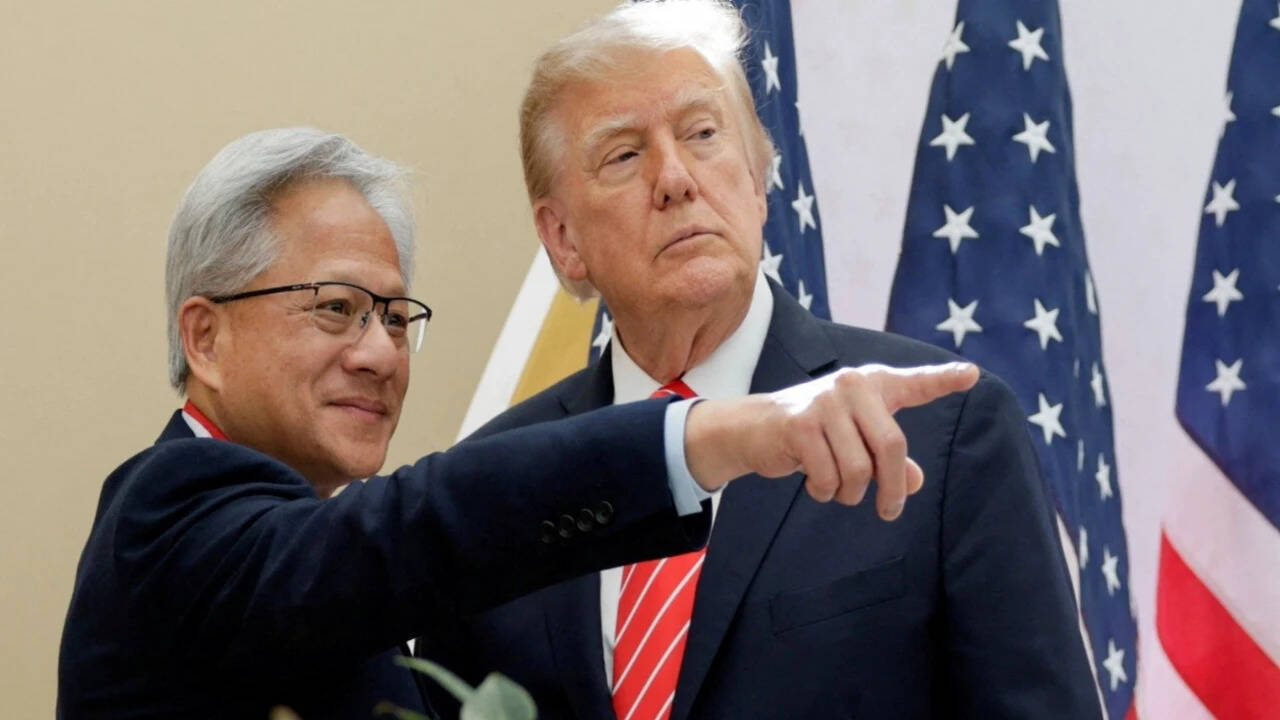
The concrete rupture in the US-China tech dynamic is the explicit alignment of American political leadership with a single corporate figure in the semiconductor sector. By placing his chips on Jensen Huang, President Trump is not merely endorsing a business leader but is effectively designating Nvidia as a frontline asset in the technological cold war. This decision elevates the stakes for the company, transforming its commercial success into a matter of national security. The immediate shockwave is felt in the markets, where Nvidia’s stock and the broader semiconductor sector are now subject to geopolitical volatility that transcends traditional financial metrics.
The underlying tension stems from the growing perception that Chinese state actors are penetrating Western tech firms to steal intellectual property and accelerate their own chip development. The institutional friction here is between the open, market-driven nature of the tech industry and the closed, state-directed approach of China’s tech sector. The US government’s reliance on private sector leaders like Huang creates a complex dynamic where corporate strategy is subordinated to geopolitical objectives. This friction is exacerbated by the difficulty of verifying espionage claims and the potential for overreach in security measures that could stifle innovation.
The downstream casualties include the potential for a fragmented global technology ecosystem, where supply chains are increasingly bifurcated along national lines. The tangible outcome is a heightened state of alert within the tech industry, with companies investing heavily in security and compliance to avoid becoming targets of espionage or sanctions. For consumers, this may translate into higher prices and reduced choice as the efficiency gains from a unified global market are eroded by geopolitical barriers. The long-term consequence is a world where technology is not just a commercial product but a primary instrument of state power.
Comments 0