Yamuna's Political Bath: Tiwari's Dip and the Disputed Narrative of Clean Water
Delhi Deputy Chief Minister Manoj Tiwari took a public dip in the Yamuna river, claiming pollution levels have halved, a statement that was immediately disputed by the opposition AAP. The event has transformed a religious ritual into a high-stakes political contest over the city's environmental record and the efficacy of government cleanup initiatives.
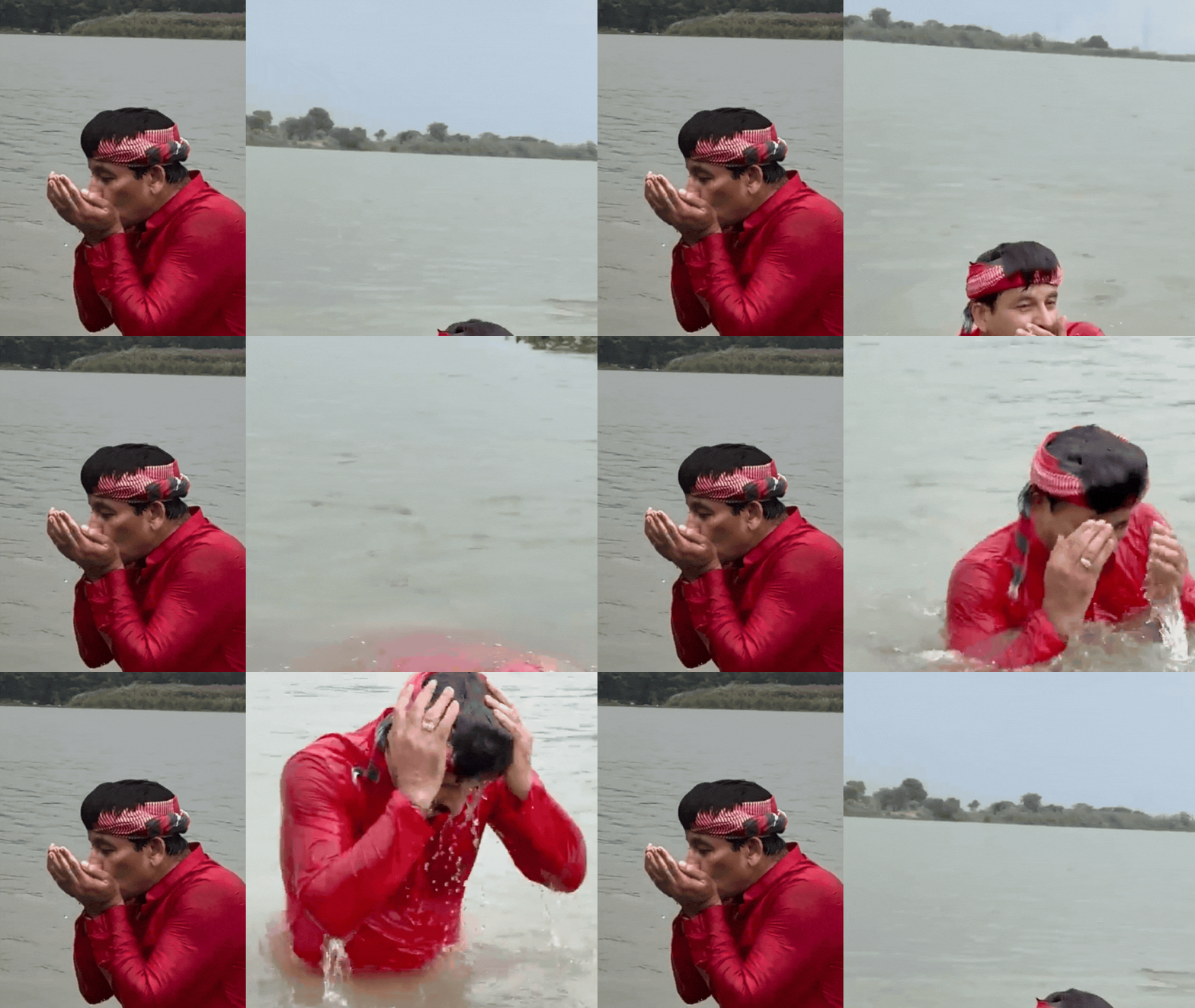
The concrete rupture in Delhi's political discourse occurred when Deputy Chief Minister Manoj Tiwari entered the Yamuna river for a dip, publicly asserting that pollution levels in the water body have been reduced by half. This act was not merely a personal or religious gesture but a calculated political statement intended to showcase the government's success in environmental remediation. The immediate shockwave was the swift rebuttal from the Aam Aadmi Party, which disputed the claim, framing it as a political stunt that ignores the ongoing crisis of water quality and public health in the capital.
The underlying tension revolves around the control of the narrative regarding the Yamuna's state. For the ruling coalition, the dip serves as a visual proof of progress, aiming to consolidate support by demonstrating tangible results in a long-standing environmental failure. For the opposition, the act is a distraction from the systemic issues of sewage discharge, industrial waste, and inadequate infrastructure that continue to plague the river. The institutional friction here is between the executive's desire to project competence and the opposition's role as a watchdog that challenges official statistics and visual evidence. The river itself becomes a contested space where environmental data is politicized.
The downstream consequences of this dispute extend beyond the immediate political skirmish to the broader public perception of environmental governance in Delhi. If the government's claims are not substantiated by independent data, trust in official environmental reporting will erode further. The tangible outcome is a heightened scrutiny of water quality metrics and a potential push for third-party audits of the Yamuna's health. The casualties are the citizens who rely on the river for their livelihoods and spiritual practices, who are left to navigate a where environmental truth is debated in the arena of political rivalry rather than in the courts of science.
Comments 0