Amsterdam Paralyzed by Gaza Outrage as 'Red Line' March Unfolds
A massive 'Red Line' march has brought the Dutch capital to a standstill, reflecting the depth of public anger over the government's response to the war in Gaza. The event signals a growing disconnect between the Dutch state and its populace, with civil disobedience becoming a primary tool for political expression.
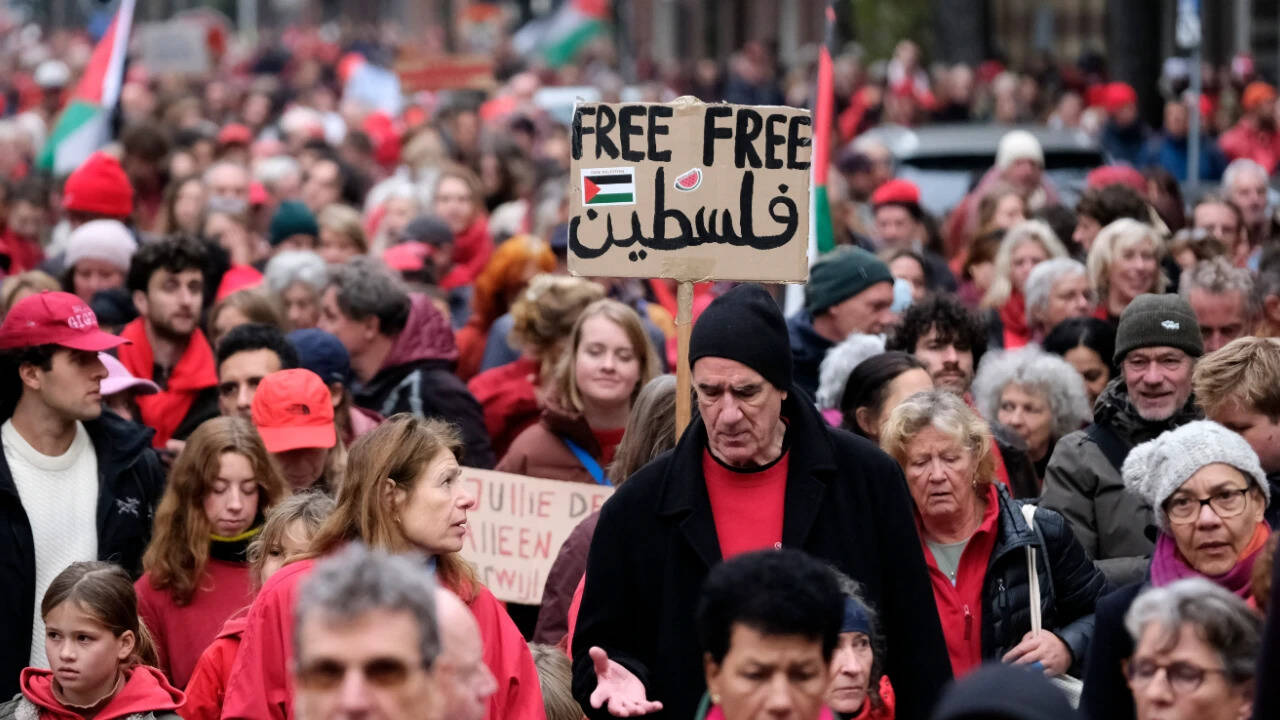
The streets of Amsterdam have become a stage for a profound political rupture, as thousands of citizens gathered for a 'Red Line' march that effectively halted the city's movement. This is not merely a protest but a declaration of moral opposition to the Dutch government's stance on the Israel-Gaza conflict. The scale of the turnout indicates that the issue has transcended partisan lines, uniting diverse segments of society in a shared sense of outrage. The physical disruption of the city serves as a tangible measure of the public's refusal to accept the status quo.
The underlying tension is a crisis of legitimacy for the Dutch government. The administration's response to the war has been perceived as inadequate or complicit by a significant portion of the electorate, leading to a loss of trust. The march is a direct challenge to the government's authority, forcing it to confront the reality that its policies are no longer acceptable to the people it represents. This friction between state and society is a hallmark of democratic systems under stress, where public opinion outpaces political action.
The downstream consequences include a potential shift in electoral dynamics and a reevaluation of the government's foreign policy. The visibility of the march puts pressure on political leaders to either capitulate to public demands or face a backlash in upcoming elections. For the international community, the event underscores the growing global opposition to the war, which could influence diplomatic efforts and aid packages. The 12-month outlook suggests a sustained period of civil unrest in the Netherlands, with the government facing increasing difficulty in maintaining its current policy trajectory.
Comments 0