Britannia called its bread as ‘100% Whole Wheat’, but atta made up only 62% of the product; CCPA calls the claim misleading, fines company Rs 1 lakh and orders it to withdraw the advertisement across print, electronic and social media within 15 days
The Consumer Protection Competition Authority fined Britannia Rs 1 lakh and ordered the withdrawal of an advertisement that claimed its bread was 100% whole wheat, while the product actually contained only 62% wheat flour. The authority labeled the claim as misleading and mandated removal of the ad from all media within 15 days.
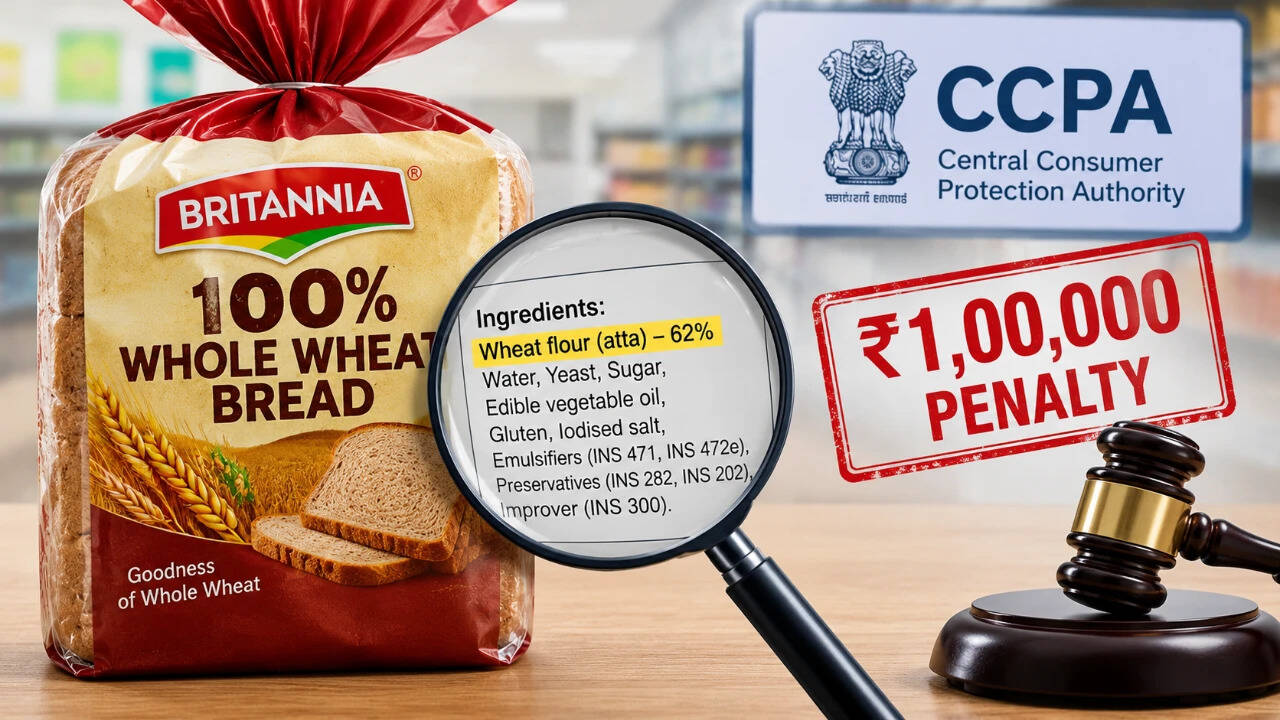
Britannia, a leading food manufacturer, faced regulatory action after the Consumer Protection Competition Authority (CPCA) examined a recent advertisement that promoted its bread as "100% Whole Wheat." Laboratory analysis and product labeling revealed that the bread's composition included only 62% wheat flour, with the remainder made up of other ingredients such as refined flour and additives. The CPCA concluded that the claim misled consumers about the nutritional value of the product, violating advertising standards that require truthful representation of food content.
In response, the CPCA imposed a monetary penalty of Rs 1 lakh on Britannia and issued a directive to pull the advertisement from print, electronic, and social media platforms within a fifteen‑day window. The authority also instructed the company to issue a corrective notice to inform consumers of the actual composition of the bread. Britannia's spokesperson confirmed that the company would comply with the order and review its marketing practices to avoid future discrepancies. The case highlights the growing scrutiny of food labeling in India, where consumers are increasingly demanding transparency about ingredients and health claims.
For Indian shoppers, the ruling serves as a reminder to read product labels carefully and to question promotional statements that may exaggerate health benefits. The CPCA's action reinforces the role of regulatory bodies in safeguarding consumer interests and maintaining confidence in the marketplace. As the food industry continues to evolve, companies are expected to align their advertising with factual data to prevent similar violations.
Comments 0