Delhi's Commute Tax: How GRAP Measures Are Emptying the Pockets of the Capital's Working Class
The Graded Response Action Plan has imposed a de facto tax on mobility in Delhi, extending travel times and eroding the disposable income of residents. The policy's impact is disproportionately felt by those who rely on private vehicles for their livelihood, creating a new class of economic casualties in the national capital.
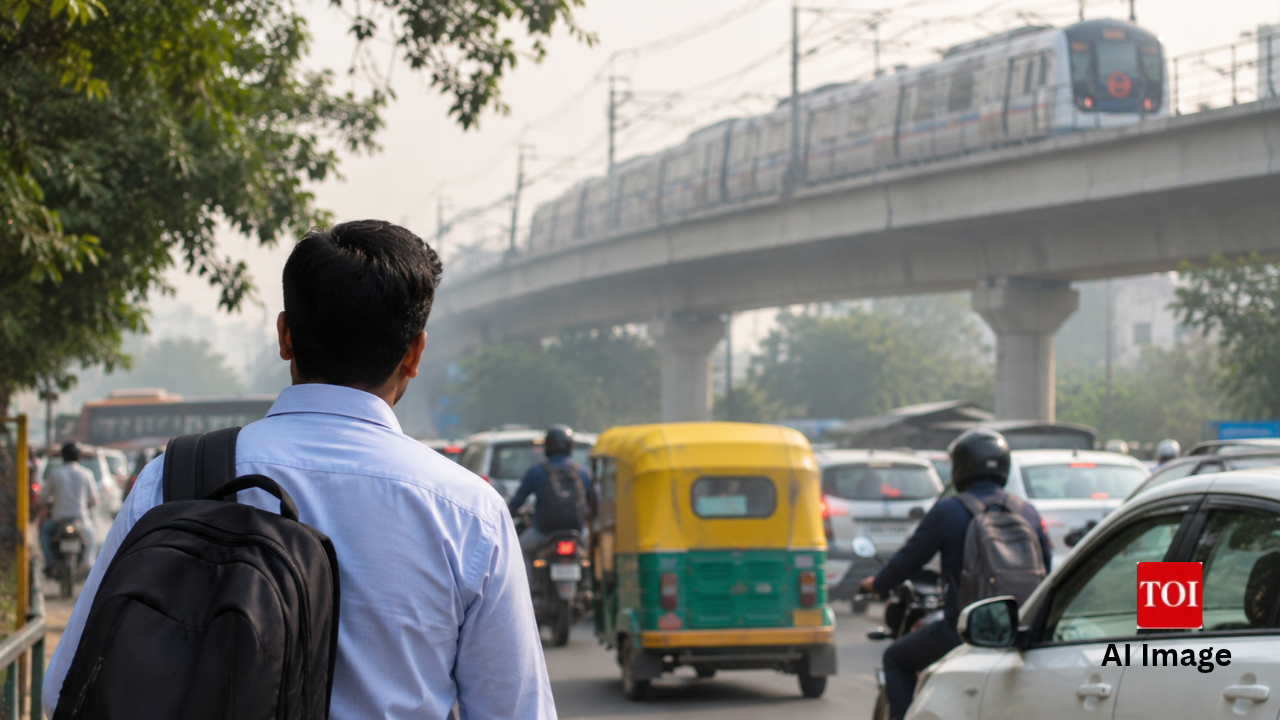
The concrete rupture in Delhi's daily rhythm is not the smog itself, but the financial hemorrhage it has caused. The implementation of the Graded Response Action Plan has transformed the act of commuting into a punitive exercise, where every additional minute spent in traffic translates directly into lost wages and increased fuel expenditure. For the working class, this is not an abstract environmental concern; it is a tangible reduction in household income that compounds with every trip to work. The city's infrastructure, already strained, now functions as a barrier to economic participation for a significant portion of its population.
The underlying tension lies in the clash between public health imperatives and the economic realities of a city that has not yet built the mass transit capacity to absorb the displaced traffic. Institutional friction is evident in the lack of viable alternatives; the government mandates restrictions without providing the corresponding infrastructure to make them bearable. This creates a perverse incentive where the poorest residents, who are least responsible for the pollution, are the most severely punished by the measures designed to address it. The policy operates as a regressive tax, shifting the burden of environmental remediation onto the shoulders of those with the least financial cushion.
The downstream outcome is a quiet but persistent erosion of consumer spending in the capital. As disposable income shrinks, local businesses that rely on daily footfall and commuter spending face a decline in revenue, creating a negative feedback loop in the urban economy. The tangible casualty is the middle class, which finds its quality of life diminished not by a lack of opportunity, but by the sheer cost of moving through the city. This dynamic threatens to deepen social stratification, as those with the means to work remotely or hire drivers are insulated from the commute tax, while the rest are trapped in a cycle of financial depletion.
Comments 0