Democracy destroyed in 2014, 'fascists' running India: Rahul
Congress leader Rahul Gandhi has accused the current government of destroying democracy and running the country in a fascist manner. He asserted that the opposition is certain to defeat Prime Minister Narendra Modi in the upcoming elections.
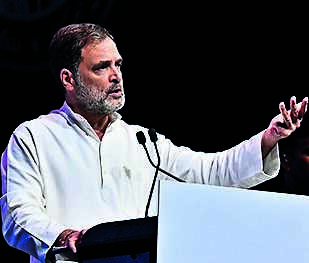
In a pointed political address, Rahul Gandhi has leveled severe accusations against the ruling government, claiming that democratic institutions in India have been significantly undermined since 2014. He described the current political climate as one where fascist elements are in control, a characterization that has drawn sharp reactions from the ruling party and its allies. The statement forms part of a broader narrative being pushed by the opposition to frame the upcoming general elections as a decisive battle for the survival of democratic values in the country. This rhetoric aims to mobilize voters who are concerned about the state of civil liberties and institutional independence.
Gandhi further declared that the defeat of Prime Minister Narendra Modi is a certainty, stating that it is a done deal. This confident tone reflects the opposition's strategy to project strength and unity in the face of the incumbent's popularity. By framing the election as a binary choice between democracy and authoritarianism, the opposition seeks to consolidate support across different ideological lines. The comments are likely to intensify the political discourse in the lead-up to the polls, with both sides engaging in a battle of narratives over the state of the nation. The use of such strong language is intended to galvanize the base and attract undecided voters who may be disillusioned with the status quo.
For readers in India, this exchange highlights the high stakes of the upcoming electoral cycle. The accusations of democratic erosion are not merely political jargon but reflect genuine concerns among citizens regarding the functioning of key institutions such as the judiciary, media, and electoral bodies. The opposition's confidence in winning suggests a strategic shift in their campaigning approach, focusing on broader systemic issues rather than just local grievances. As the election date approaches, the intensity of these debates is expected to rise, with both parties vying for the moral high ground. The outcome of this narrative battle could have a significant impact on voter turnout and the final electoral result.
Comments 0