Drought Strangles Rabi Sowing in Madhya Pradesh
A severe water deficit has halted agricultural activity across 5.4 lakh hectares in the state, threatening the winter crop cycle. The disruption signals a deepening crisis for food security and rural livelihoods in the region.
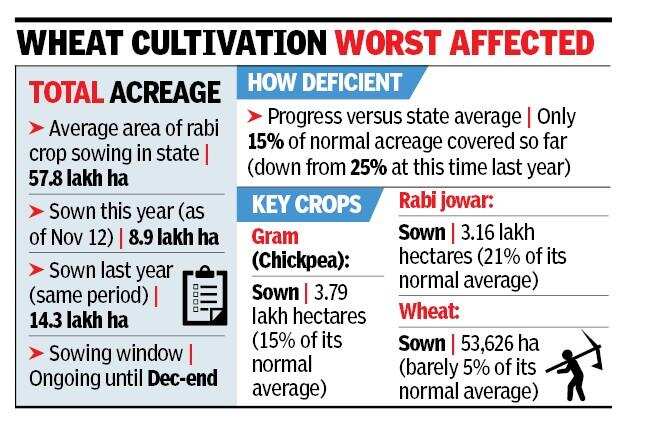
The agricultural calendar in Madhya Pradesh has been violently interrupted by a persistent drought that has rendered 5.4 lakh hectares of land unsuitable for rabi sowing. This is not merely a delay in planting; it is a structural failure of the water supply system that underpins the state's winter harvest. Farmers who prepared their fields in anticipation of the season now face the prospect of empty paddies, a reality that transforms a seasonal setback into a long-term economic wound for the agrarian economy.
The underlying tension here is the widening gap between climatic volatility and the state's capacity to manage water resources. The deficit is not an isolated weather event but a symptom of depleted groundwater tables and erratic monsoon patterns that have become the new normal. Institutional friction arises as local authorities struggle to allocate scarce water reserves between competing demands, leaving the most vulnerable farming communities without the support necessary to mitigate the loss of their primary income source.
The downstream casualties are immediate and tangible. With the rabi crop compromised, food prices are poised to rise, squeezing the margins of urban consumers while simultaneously destroying the income of rural producers. This dual shockwave will likely accelerate the migration of labor from agricultural zones to urban centers, further straining city infrastructure and deepening the economic divide between the state's industrial hubs and its agrarian heartland.
Comments 0