Electoral Administration Disparities Surface Across Adjacent Nandigram Blocks in West Bengal
Local observers documented stark procedural variations in voter accessibility between neighboring administrative districts during recent electoral updates. Civil rights advocates warn that uneven bureaucratic efficiency directly undermines the principle of equal suffrage.
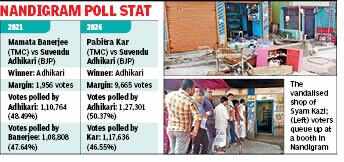
An investigation into voter registration and polling station accessibility in West Bengal revealed pronounced operational divides between two distinct Nandigram blocks. Residents in one administrative zone experienced streamlined digital enrollment and robust civic outreach, while neighboring communities faced severe bureaucratic hurdles and prolonged delays. These discrepancies have reignited fierce debates regarding the administrative capacity of local election machinery. Political stakeholders in the region have weaponized these operational inequalities to accuse election authorities of partisan bias. Grassroots political workers noted that lower ease of voting indices directly correlate with depressed turnout figures in specific demographic strongholds. Local civil servants defended their performance by citing staffing shortages and infrastructural deficits in remote rural pockets. The resulting friction threatens to compromise the legitimacy of upcoming local governance contests in the state. Election commissions will face mounting legal petitions demanding uniform administrative standards and transparent resource allocation across all rural voting jurisdictions.
Comments 0