Farooq Abdullah's Remarks on Kashmir and Pakistan Spark Political Firestorm
The National Conference leader's comments on the status of Kashmir and relations with Pakistan have triggered a sharp backlash from rival political factions. This controversy highlights the enduring fragility of the region's political consensus and the high stakes of any public discourse on territorial integrity.
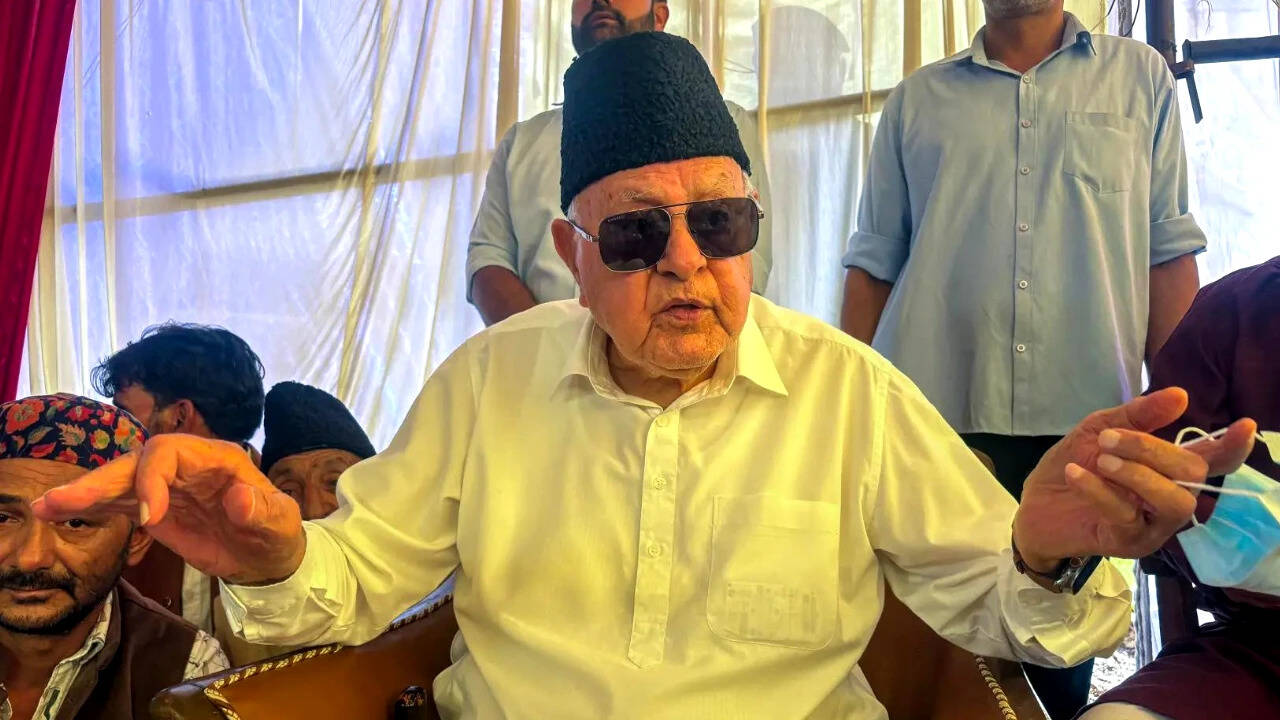
Farooq Abdullah, the veteran leader of the National Conference, has found himself at the center of a political storm following a speech in which he addressed the sensitive issues of Kashmir and Pakistan. His remarks, which urged party workers to remain loyal and truthful, have been interpreted by critics as a challenge to the prevailing political narrative in the region. The backlash is not merely partisan but reflects a deeper anxiety about the future of the state and its relationship with the central government.
The underlying tension in this controversy is rooted in the complex history of Kashmir's political integration and the ongoing debate over its constitutional status. Institutional friction is evident in the way different political actors frame the issue, with some emphasizing national unity and others advocating for greater autonomy. This divide has made any public statement on the subject a potential flashpoint, requiring careful navigation by political leaders who seek to maintain their relevance in a rapidly changing political .
The immediate consequence of this controversy is a further polarization of public opinion in the region. The downstream impact may be seen in the way political alliances are formed and broken in the coming months, as parties seek to capitalize on the heightened emotions surrounding the issue. The stability of the region will depend on the ability of political leaders to manage this discourse without exacerbating existing tensions, a task that will require both diplomatic skill and a deep understanding of the local political context.
Comments 0