Jaishankar and Nepal's New Prime Minister Signal a Diplomatic Reset
External Affairs Minister S Jaishankar met with Nepal's newly appointed Prime Minister Balen Shah to reaffirm India's commitment to a special bilateral relationship. The engagement underscores a strategic pivot toward stabilizing New Delhi's northern frontier as Nepal navigates its own political transitions.
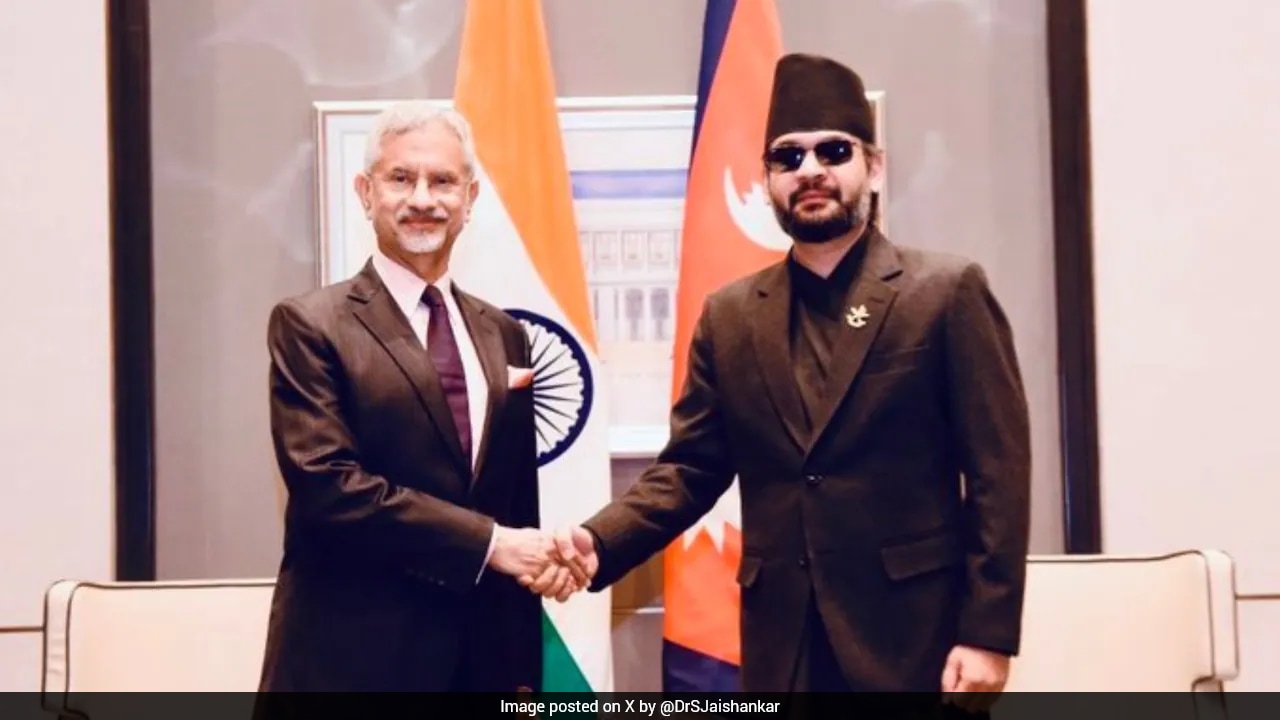
The meeting between S Jaishankar and Balen Shah represents a calculated move to secure diplomatic continuity in a region prone to sudden political upheaval. By emphasizing the cherished friendship between the two nations, the Indian government seeks to reassure Kathmandu that its strategic interests remain aligned with New Delhi's broader regional architecture. This high-level contact serves as a buffer against external influences that have historically sought to exploit the geographic and cultural proximity of the two states.
The underlying tension in this relationship often stems from the delicate balance of sovereignty and security. Nepal's new leadership faces the immediate challenge of managing domestic expectations while maintaining the complex economic and transit ties that bind it to India. Institutional friction can arise when domestic political pressures in Kathmandu clash with the strategic imperatives of the larger neighbor, making such personal diplomatic engagements essential for smoothing over potential misunderstandings before they harden into policy disputes.
The tangible outcome of this dialogue is a reinforced framework for cooperation that likely extends beyond symbolic gestures to include concrete discussions on trade, connectivity, and security. For the people of both nations, this stability translates into more predictable cross-border movement and economic exchange. The downstream effect is a reduction in geopolitical volatility in the Himalayan region, which is critical for the broader security dynamics of South Asia.
Comments 0