Skip to content
🌐 Global🇮🇳 India📍 Asia-Pacific📍 Bihar📍 Delhi-NCR📍 East India📍 Europe📍 Gujarat📍 Karnataka📍 Kerala📍 Madhya Pradesh📍 Maharashtra📍 Middle East📍 North India📍 Northeast India📍 Punjab📍 Rajasthan📍 South India📍 Tamil Nadu📍 Telangana📍 United Kingdom📍 United States📍 Uttar Pradesh📍 West Bengal📍 West India
LIVE
Home / Politics
Politics

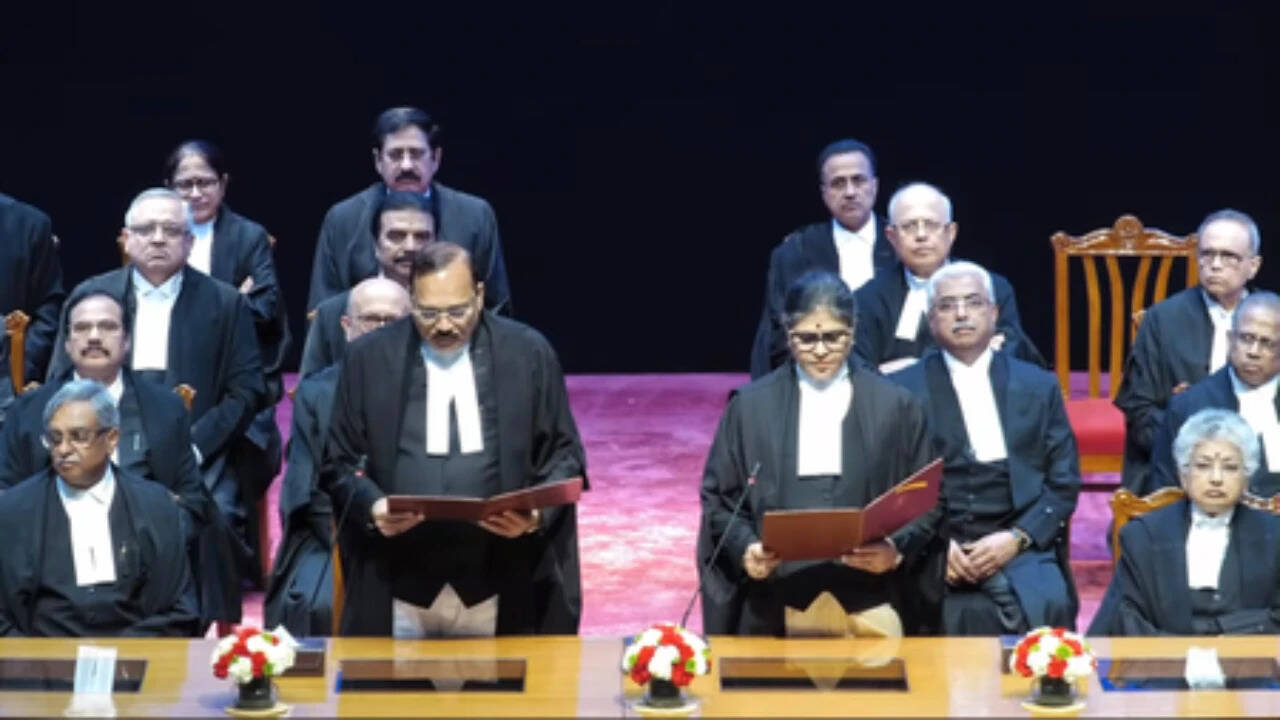
Judicial Oath Controversy: Supreme Court Inducts Three New Judges Amid Demographic Concerns

Three newly appointed Supreme Court justices took their oaths of office, drawing immediate scrutiny over homogeneous swearing-in traditions. The elevation leaves the highest court with only three female judges out of a total bench strength of thirty-seven.
Times of IndiaOctober 7, 20261 min read
Share this story
Judicial Oath Controversy: Supreme Court Inducts Three New Judges Amid Demographic Concerns
The Strategic Consequence
Public pressure will mount on the collegium to publish transparent criteria for diversity to restore institutional legitimacy.

The Supreme Court of India welcomed three new justices in a formal swearing-in ceremony characterized by traditional religious oaths. While the ceremony proceeded with standard institutional solemnity, legal analysts immediately trained their focus on the persistent demographic imbalance within the judiciary. The appointments leave female representation at a dismal three out of thirty-seven active judges. This appointment cycle reignites fierce debates regarding the opaque collegium system and its inability to diversify the highest bench. Civil rights organizations argue that an overwhelmingly homogenous judiciary fails to reflect the pluralistic fabric of the nation. Institutional defenders maintain that meritocracy and seniority remain the sole constitutionally mandated criteria for elevation. The immediate consequence is sustained public skepticism regarding judicial inclusivity in landmark social justice adjudications. Marginalized advocacy groups plan to petition parliament for comprehensive structural reforms in judicial appointment protocols. The underrepresentation of women guarantees that gender-sensitive jurisprudence will remain a contested battleground within the apex court.

📰 Primary Source Publication Verified Resource & Provenance
✉
The Next Brief
Get the day's most important stories in one email
AI-curated morning digest. No noise. Unsubscribe anytime.

Full coverage

4 stories on this
  1. Times of IndiaNew Supreme Court Judges Take Oath as Representation Debates PersistOctober 7, 2026
  2. The Hindu NationalSupreme Court Leadership Considers Plea to Recall Contentious Split Verdict on Election CommissionersOctober 7, 2026
  3. The Hindu Tamil NaduLegal Challenge at Madras High Court Tests Enforcement Directorate Reach in Mineral ScamOctober 7, 2026

Comments 0

Advertisement

Related stories

Most read

  1. 1Agile Space Industries Strengthens Board and Corporate Development to Support Continued GrowthDefence
  2. 2Milk price in Karnataka may go up by ₹8, but only after Legislative Council pollsPolitics
  3. 3Sanjay Leela Bhansali, Alia Bhatt in talks to revive shelved Salman Khan starrer 'Inshallah'Entertainment
  4. 4Updated NFL Power Rankings: Where do the final three undefeated teams stand after four weeks?Sports
  5. 5New report exposes modern poverty and inequality in one of Britain's 'most affluent cities'Science