Maharashtra CM Defends Felling of 32,000 Trees in Karjat
Maharashtra Chief Minister Devendra Fadnavis has asserted that the felling of 32,000 trees in the Karjat region adhered to all legal due processes, countering environmental protests. The controversy highlights the growing friction between state-led infrastructure development and ecological preservation in the Western Ghats.
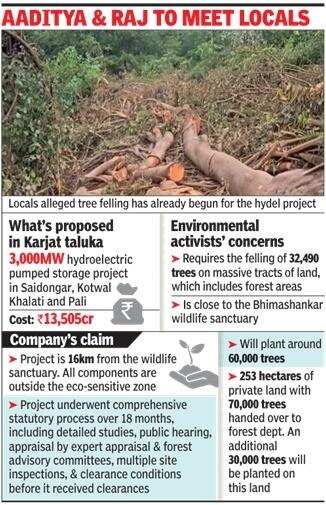
The felling of 32,000 trees in the Karjat area has ignited a fierce debate over environmental stewardship and state authority. Chief Minister Devendra Fadnavis has publicly defended the action, stating that every procedural requirement was met before the trees were cut. This assertion places the conflict squarely in the realm of legal compliance versus ecological ethics, challenging the notion that bureaucratic approval equates to environmental responsibility. The scale of the deforestation, occurring in a region known for its biodiversity, has drawn sharp criticism from environmental groups and local residents who view the loss as irreversible.
The tension between development and conservation is a recurring theme in Indian politics, but the Karjat incident has elevated the stakes due to the proximity to the Western Ghats, a UNESCO World Heritage site. The state government's insistence on due process suggests a broader strategy to shield infrastructure projects from judicial and public scrutiny by emphasising legal technicalities. This approach reflects a wider trend where environmental clearances are treated as administrative hurdles rather than substantive safeguards, leading to a disconnect between policy implementation and ecological reality. The friction is further compounded by the lack of transparent public consultation, which has fuelled accusations of opacity and favouritism in the decision-making process.
The downstream impact of this controversy extends beyond the immediate loss of trees to the broader credibility of the state's environmental governance. The incident has emboldened opposition parties to use environmental issues as a central plank of their campaign, potentially shifting the political discourse away from economic growth towards sustainability. For the state government, the challenge lies in balancing the need for infrastructure development with the imperative to protect natural resources, a balance that will be scrutinised in future projects. The outcome of this dispute will likely set a precedent for how environmental clearances are handled in similar cases across the country.
Comments 0