Maharashtra Suspends Infrastructure Projects to Combat Severe Drought
The state government has halted non-essential infrastructure works to redirect financial resources toward urgent drought relief measures. This decisive pivot signals a critical shift in fiscal priority, prioritizing immediate water security over long-term urban development.
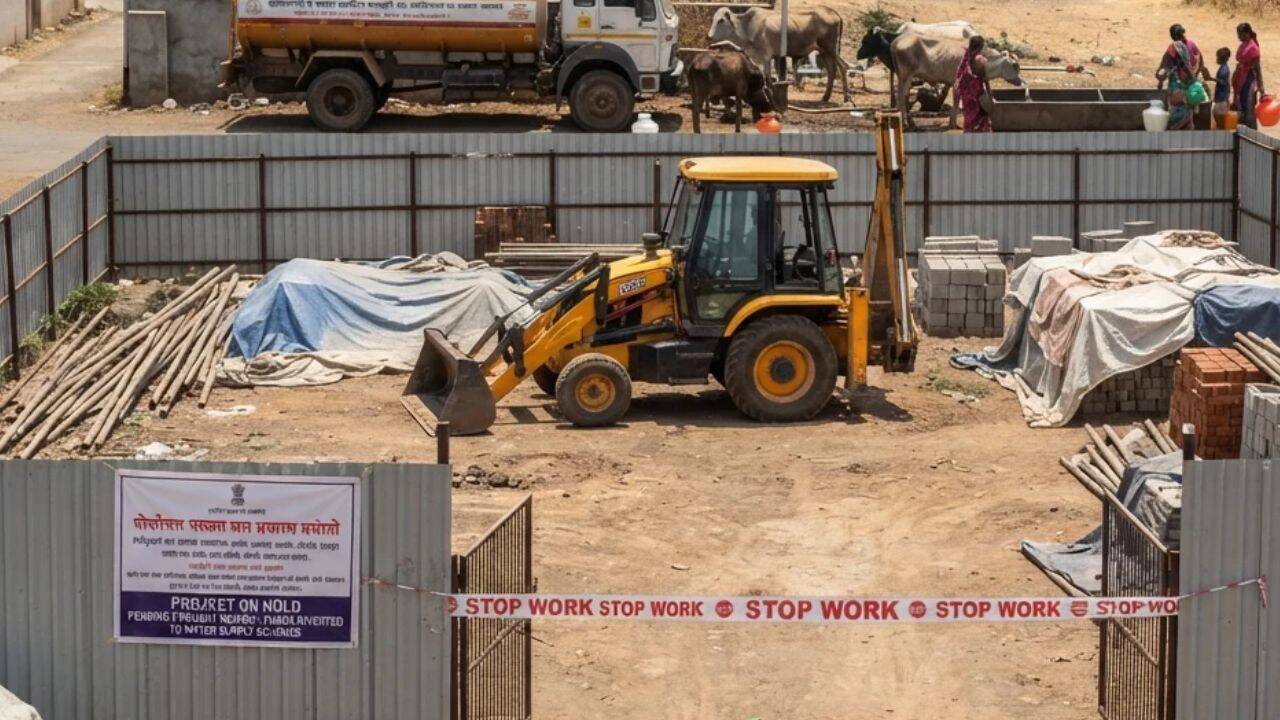
The concrete rupture in Maharashtra’s administrative calendar is the immediate suspension of non-essential infrastructure projects. This move is not merely a budgetary adjustment but a direct response to the severe water crisis gripping the state. By freezing construction and development activities, the government is attempting to stem the outflow of funds that would otherwise be locked in concrete and steel, redirecting them instead to the desperate task of securing water supplies for a parched population. The decision underscores the severity of the situation, where the basic necessity of water has overtaken the economic imperative of growth.
The underlying tension here is a stark collision between long-term developmental goals and immediate survival needs. Infrastructure projects, often the hallmark of a modernizing state, are now viewed as a luxury that cannot be afforded in the face of a humanitarian emergency. This friction highlights the fragility of state planning when confronted with climate-induced shocks. The institutional mechanism for such a pivot is rarely tested, and its activation reveals the hierarchical nature of state priorities, where the preservation of life and livelihood supersedes the accumulation of physical capital. The legal and administrative frameworks that govern these projects are now being strained to accommodate this sudden reallocation of resources.
The downstream casualties of this decision are the contractors, laborers, and local economies that depend on the steady flow of infrastructure spending. These sectors face immediate financial uncertainty, with projects stalled and wages potentially delayed. However, the tangible outcome is the potential for a more resilient water management system, funded by the diverted resources. This shift may force a broader reevaluation of how states prepare for climate volatility, moving from reactive measures to proactive, well-funded strategies. The long-term impact could be a more robust public health and environmental infrastructure, built on the foundation of this crisis-driven fiscal discipline.
Comments 0