Rahul Gandhi Accuses BJP of Forcing Shop Closures in Delhi
Rahul Gandhi has alleged that the BJP has forcibly shut down shops in Delhi's Connaught Place area during a mega rally, a claim that has intensified political tensions in the capital. The accusation highlights the growing polarization in Indian politics and the use of public spaces as a battleground for electoral mobilization.
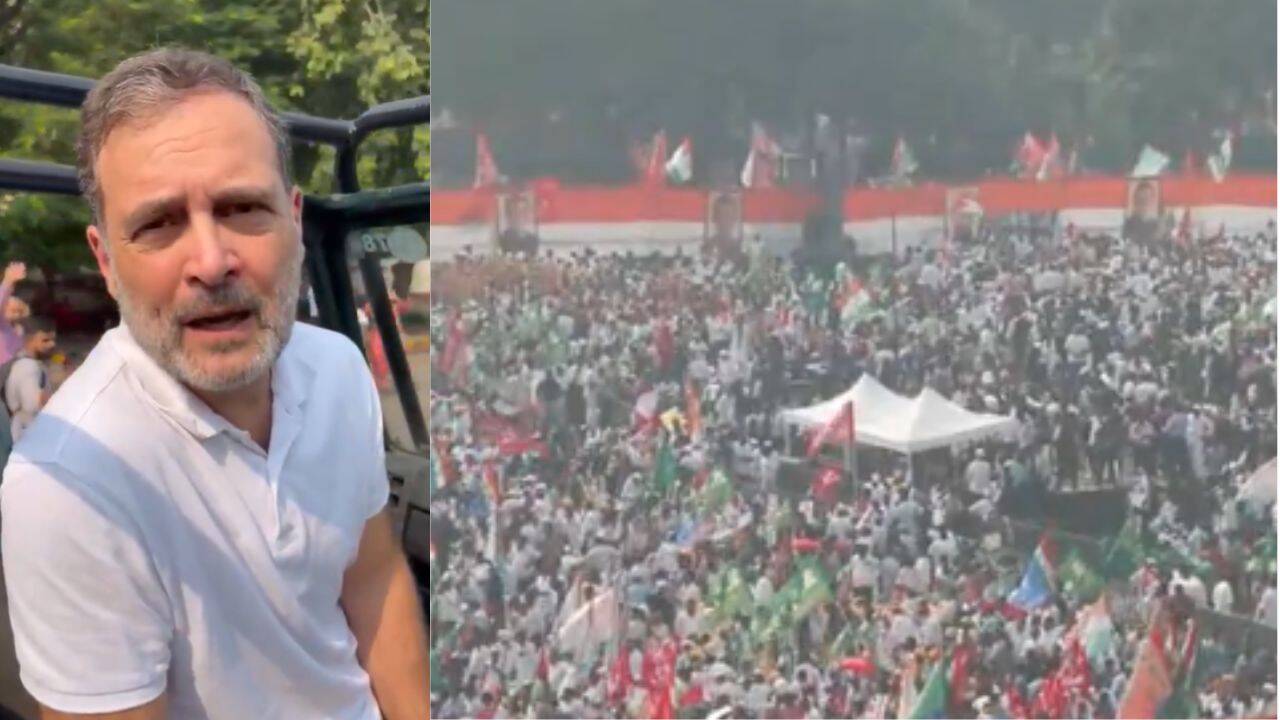
Rahul Gandhi's accusation that the BJP has forcibly shut down shops in Delhi's Connaught Place area represents a significant escalation in the political discourse surrounding the upcoming elections. The claim, made en route to the Ramlila Maidan rally, has drawn sharp criticism from the ruling party, which denies the allegations and accuses the opposition of fabricating a narrative to garner sympathy. The concrete rupture is evident in the heightened tensions between the two major political parties, with the accusation serving as a flashpoint for broader debates over the conduct of political rallies and the rights of local business owners. The immediate shockwave is a surge in media coverage and public debate, with both parties using the incident to rally their respective bases.
The underlying tension in this issue is rooted in the competitive dynamics of Indian politics, where the control of public spaces is a key aspect of electoral mobilization. The institutional friction is apparent in the lack of clear guidelines for the conduct of political rallies, which often leads to conflicts between political parties and local communities. The accusation by Rahul Gandhi is also a reflection of the broader challenges facing the opposition, which is struggling to find a coherent narrative in the face of the BJP's dominant position. The use of such allegations is a strategic move to shift the focus from the ruling party's achievements to its alleged mismanagement of public affairs.
The downstream consequences of this incident are likely to be significant, with potential implications for the political in Delhi and beyond. The tangible outcome may include a more rigorous enforcement of regulations governing political rallies, as well as a renewed focus on the rights of local business owners. The long-term consequence of this development will be a more polarized political environment, where the lines between political parties and local communities are increasingly blurred. The event underscores the need for a more balanced approach to political mobilization, one that takes into account the needs and rights of all stakeholders.
Comments 0