Rampurhat Orders Meat Shops Closed for Chhath Puja, First in Bengal
The West Bengal municipality of Rampurhat issued a unprecedented directive to shut all meat vendors during the Chhath festival. The order has sparked legal debate and communal reflection on cultural accommodation.
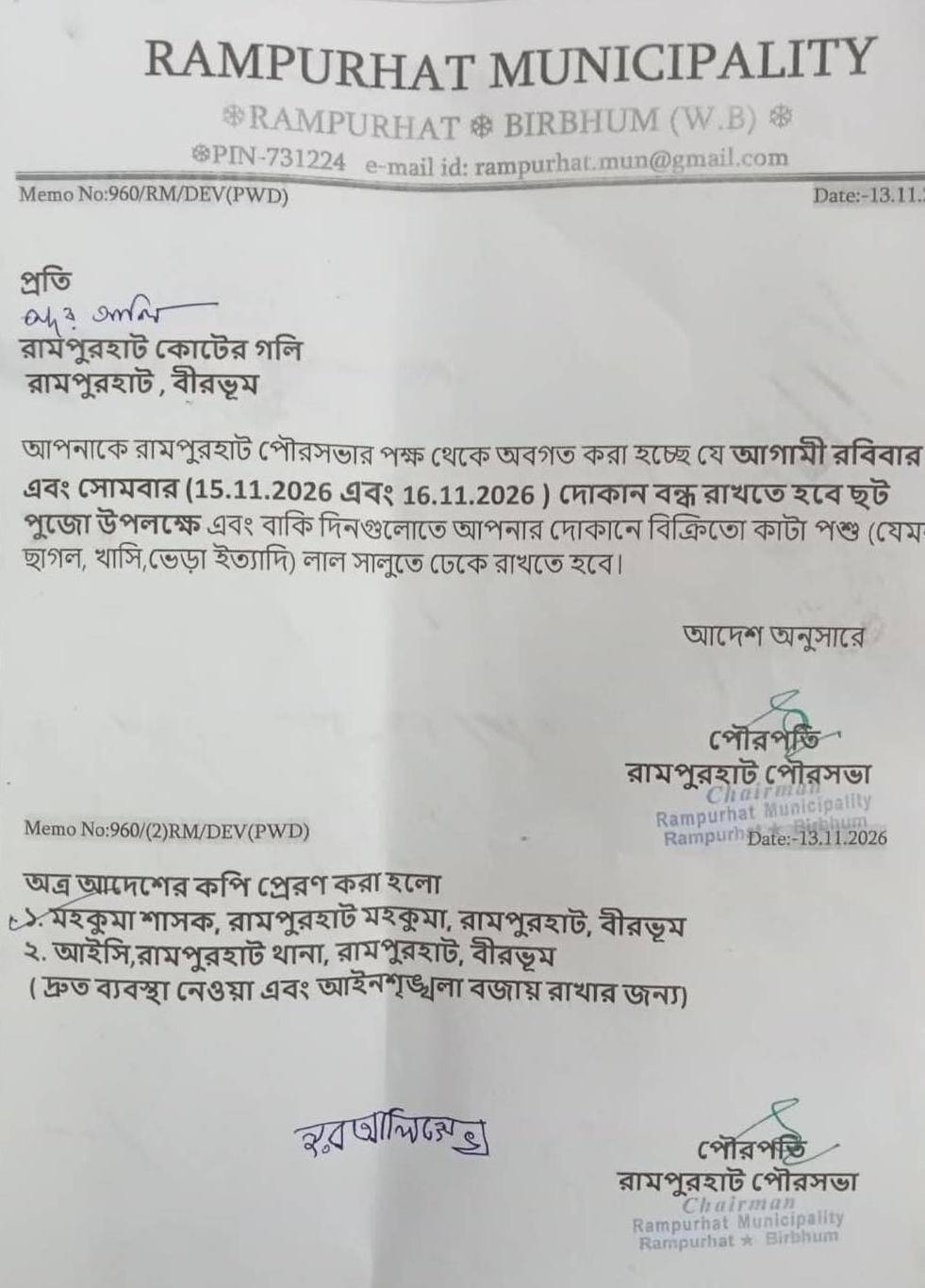
On the eve of the solar festival, the civic administration circulated a notice mandating that all meat shops cease operations for the duration of Chhath Puja, citing public order and respect for the fasting rituals observed by a sizable Hindu populace. Enforcement officers were instructed to monitor compliance, with penalties outlined for violations. The decree was reported in regional newspapers, prompting reactions from traders, religious leaders, and civil‑rights advocates.
The underlying tension emerges from the intersection of religious sentiment, commercial liberty, and municipal authority. While supporters argue that the measure upholds communal harmony and acknowledges the sanctity of the festival, opponents contend that it infringes upon the rights of minority merchants and sets a precedent for future religiously motivated restrictions. Legal scholars have begun to assess the order's compatibility with constitutional guarantees of freedom of trade and religion.
Should the directive be upheld, it may encourage other local bodies across the state to adopt similar policies during major festivals, potentially reshaping the commercial calendar in regions with diverse religious practices. Conversely, successful legal challenges could reinforce protections for minority businesses, prompting municipalities to seek alternative, less restrictive means of ensuring public order. The episode is poised to influence policy discussions on secular governance and cultural accommodation over the next twelve months.
Comments 0