Riyadh Airport Struck: Missile Impact Kills Thirteen, Including an Indian National
A missile impact at Riyadh airport has resulted in the deaths of thirteen individuals, among them an Indian citizen, marking a sharp escalation in regional hostilities. The attack underscores the vulnerability of critical infrastructure to long-range projectiles and signals a deterioration in diplomatic stability across the Middle East.
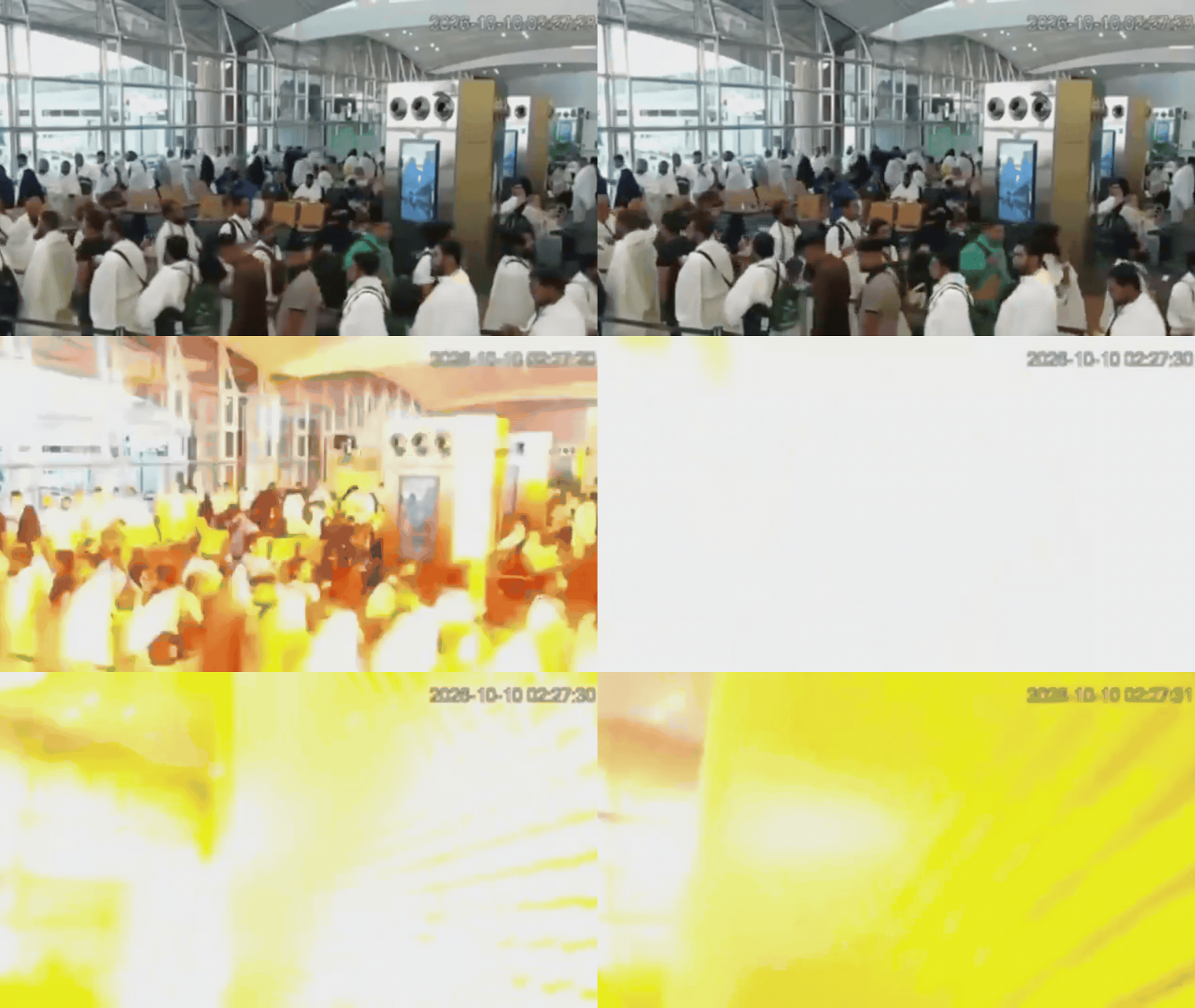
The concrete rupture occurred when a missile struck the Riyadh airport, a hub that serves as a primary gateway for international travel and a symbol of Saudi Arabia's economic modernization. The impact was immediate and catastrophic, claiming thirteen lives, a toll that includes an Indian national whose presence highlights the global reach of this localized conflict. The destruction of infrastructure in such a high-profile location serves as a stark reminder that the safety of international transit networks is no longer guaranteed in the current geopolitical climate.
The underlying tension stems from the expanding scope of regional conflicts, where proxy engagements and direct state actions have blurred the lines of traditional warfare. Institutional friction is evident in the failure of diplomatic channels to prevent such strikes, suggesting that security guarantees have eroded significantly. The targeting of civilian infrastructure, rather than purely military assets, indicates a strategic shift aimed at destabilizing the economic confidence of the Gulf states and their international partners.
The downstream casualties extend beyond the immediate loss of life to include a chilling effect on global trade and travel. Airlines and logistics firms are likely to reassess their risk profiles, potentially rerouting flights and increasing insurance premiums for operations in the region. For India, the loss of a citizen necessitates a robust consular response and may influence bilateral security dialogues, while the broader market will absorb the shock through heightened volatility in energy and defense sectors.
Comments 0