Supreme Court Petition Challenges Delhi’s SIR Implementation Amid Form 7 Misuse Allegations
Petitioners have approached the Supreme Court to challenge the implementation of the State Information Register in Delhi, citing a report on the misuse of Form 7. They seek directions to allow ASDD voters to submit enumeration forms instead of filing Form 6 to restore their names, highlighting a deepening legal and political conflict.
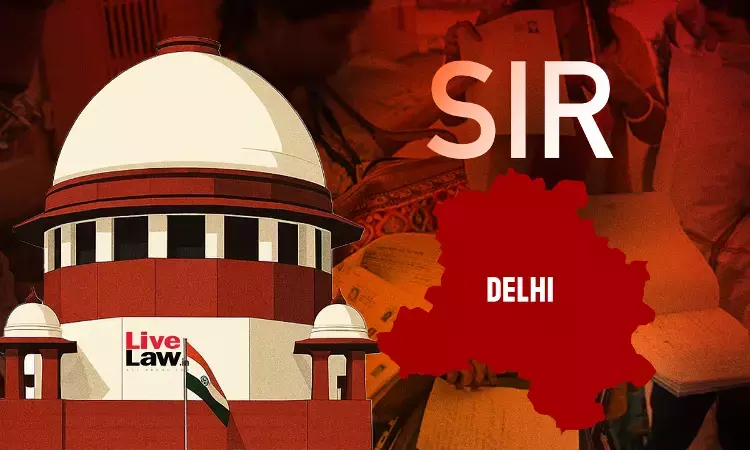
The concrete rupture in the political of Delhi is the escalation of the State Information Register (SIR) controversy to the Supreme Court. Petitioners have cited a report alleging the misuse of Form 7, a document central to the SIR process, and are seeking judicial directions to intervene. This legal challenge is not merely a procedural dispute but a direct contest over the integrity of the electoral roll and the rights of voters in the National Capital Territory.
The underlying tension is the institutional friction between the state’s administrative machinery and the political opposition, which views the SIR as a tool for political exclusion. The demand to allow ASDD voters to submit enumeration forms instead of filing Form 6 is a strategic move to bypass what petitioners perceive as a biased or flawed process. This reflects a broader distrust in the implementation of the SIR, with political parties and civil society groups arguing that the current framework is being used to disenfranchise certain communities.
The downstream consequences of this legal battle will be felt in the upcoming electoral cycles and the broader discourse on citizenship and voting rights in India. If the Supreme Court intervenes, it could lead to a restructuring of the SIR process, potentially setting a precedent for other states implementing similar measures. The tangible outcome will be a heightened scrutiny of electoral rolls and a possible delay in the finalization of voter lists, which could impact the timing and conduct of future elections in Delhi.
Comments 0