Supreme Court Questions Protection for Self-Proclaimed Journalists in Anti-CEC Protests
Justice Joymalya Bagchi of the Supreme Court has stated that self-proclaimed journalists may not enjoy the same legal protections as accredited media personnel during protests. This ruling underscores the growing institutional friction between the judiciary and the informal media ecosystem, with significant implications for press freedom and public discourse.
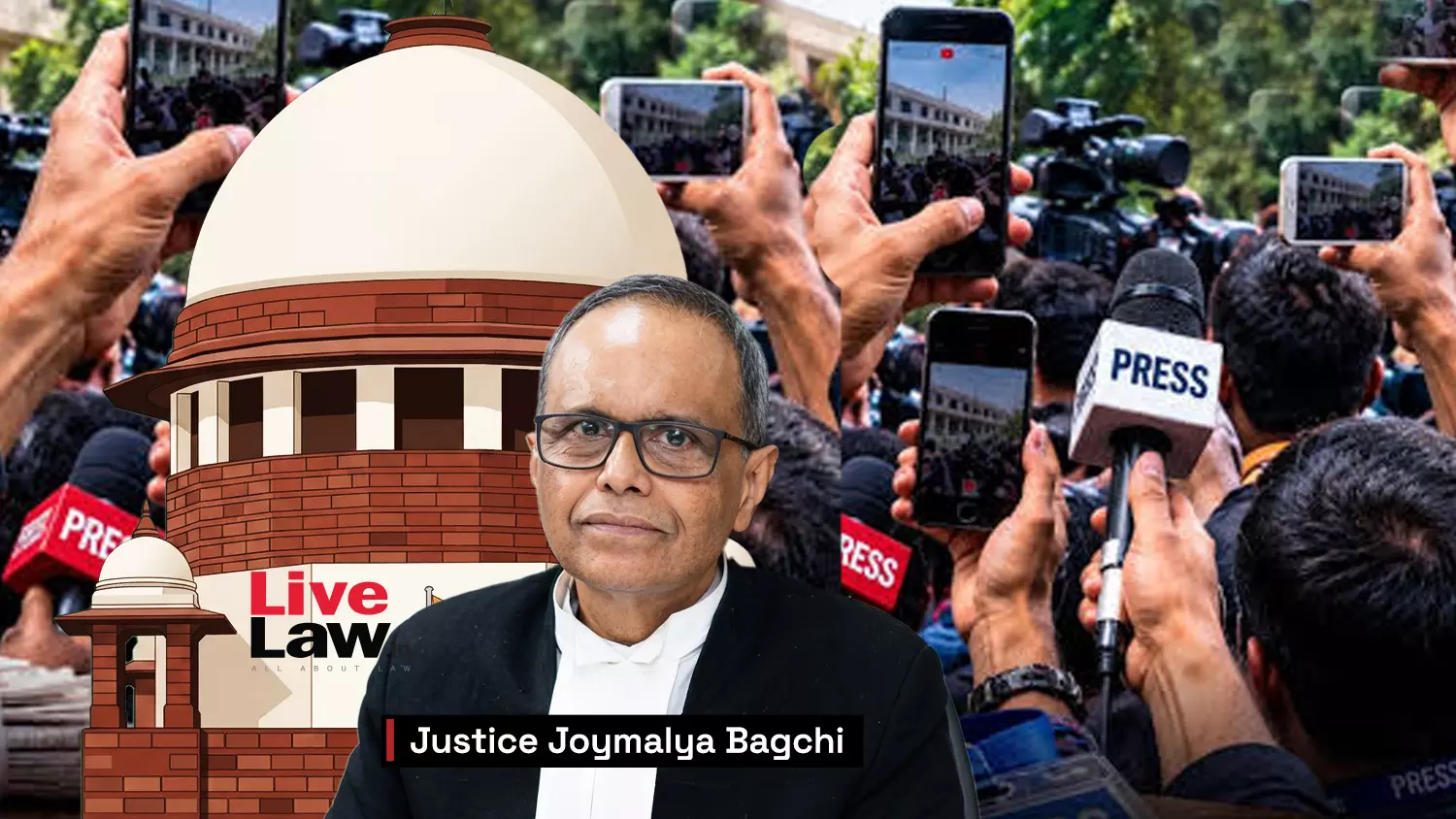
The concrete rupture is the Supreme Court's explicit distinction between accredited journalists and self-proclaimed media personnel, as articulated by Justice Joymalya Bagchi. This legal clarification challenges the assumption that anyone with a camera or microphone can claim the protections afforded to the press under the law. The court's stance is a direct response to the chaos and disorder often associated with protests, where individuals claiming to be journalists have been used to shield violent acts or obstruct law enforcement. The immediate shockwave is a redefinition of the legal boundaries of press freedom, which will likely lead to stricter scrutiny of media credentials in public spaces.
The underlying tension reflects a deep institutional friction between the judiciary's need to maintain public order and the media's claim to a special status as a pillar of democracy. The court's observation that we are in the realm of atomized individuals claiming to be journalists highlights the fragmentation of the media and the rise of informal, often unregulated, media actors. This friction is exacerbated by the political polarization that often surrounds protests, where the line between legitimate dissent and organized disruption becomes blurred.
The downstream casualties will be felt by independent journalists and citizen media workers who rely on the broad interpretation of press freedom to operate. The tangible outcome is a more regulated media environment, where accreditation becomes a prerequisite for legal protection in public protests. This shift will likely lead to a chilling effect on independent journalism, as individuals may be deterred from reporting on sensitive issues for fear of legal repercussions. The ruling sets a precedent that could be used to justify broader restrictions on media access in the future, potentially undermining the role of the press in holding power to account.
Comments 0