The Voter Gap: Uttar Pradesh's 2.7 Crore Discrepancy Raises Questions on Electoral Integrity
Uttar Pradesh faces a staggering gap of 2.7 crore between its projected adult population and the number of registered voters, with today marking the final deadline for enrollment. This massive discrepancy not only highlights systemic failures in the electoral roll process but also raises serious concerns about the inclusivity and accuracy of India's largest state's democratic representation.
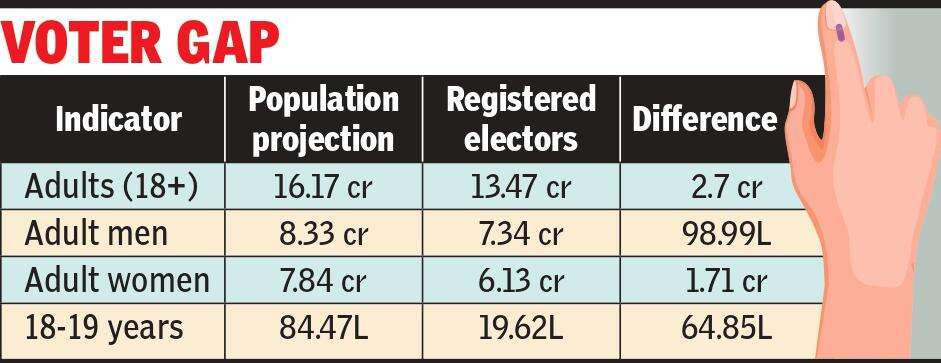
The concrete rupture in Uttar Pradesh's electoral infrastructure is the stark 2.7 crore gap between the projected adult population and the actual number of registered voters. This is not a minor statistical anomaly; it is a significant failure of the electoral roll process that has implications for the state's political . The fact that today is the last chance for enrollment underscores the urgency of the situation, but also the systemic challenges in reaching and registering a large portion of the adult population. This gap suggests that millions of eligible voters are either unaware of the process, unable to access it, or have been systematically excluded, all of which have profound implications for the fairness of future elections.
The underlying tension is rooted in the complexity of managing electoral rolls in a state as vast and diverse as Uttar Pradesh. The process of voter registration involves multiple layers of bureaucracy, and any failure at any stage can lead to significant discrepancies. The institutional friction here is between the central government's mandate for accurate and inclusive electoral rolls and the practical challenges faced by state-level administrative bodies. This tension is exacerbated by the political stakes involved, as any perceived bias in the electoral roll process can be used to challenge the legitimacy of election results. The gap also reflects broader issues of access to government services and the digital divide, which disproportionately affect marginalized communities.
The downstream casualties of this discrepancy are the millions of voters who are effectively disenfranchised, and the public's trust in the electoral process. The tangible outcome is a potential challenge to the legitimacy of future elections in Uttar Pradesh, which could lead to legal disputes and political instability. The gap also highlights the need for a more robust and transparent process for managing electoral rolls, one that is less susceptible to human error and political manipulation. This incident serves as a wake-up call for the government to invest in better systems and processes for voter registration, ensuring that every eligible citizen has a voice in the democratic process.
Comments 0