Vasant Kunj's Diwali Tragedy: A 202kmph Crash and the Failure of Urban Speed Controls
A young man from Gurgaon died after his car struck a wall at 202 kmph in Delhi's Vasant Kunj on Diwali, a speed captured by his own Snapchat story. The incident exposes the deadly consequences of unchecked high-speed driving in residential areas and the inadequacy of current traffic enforcement mechanisms.
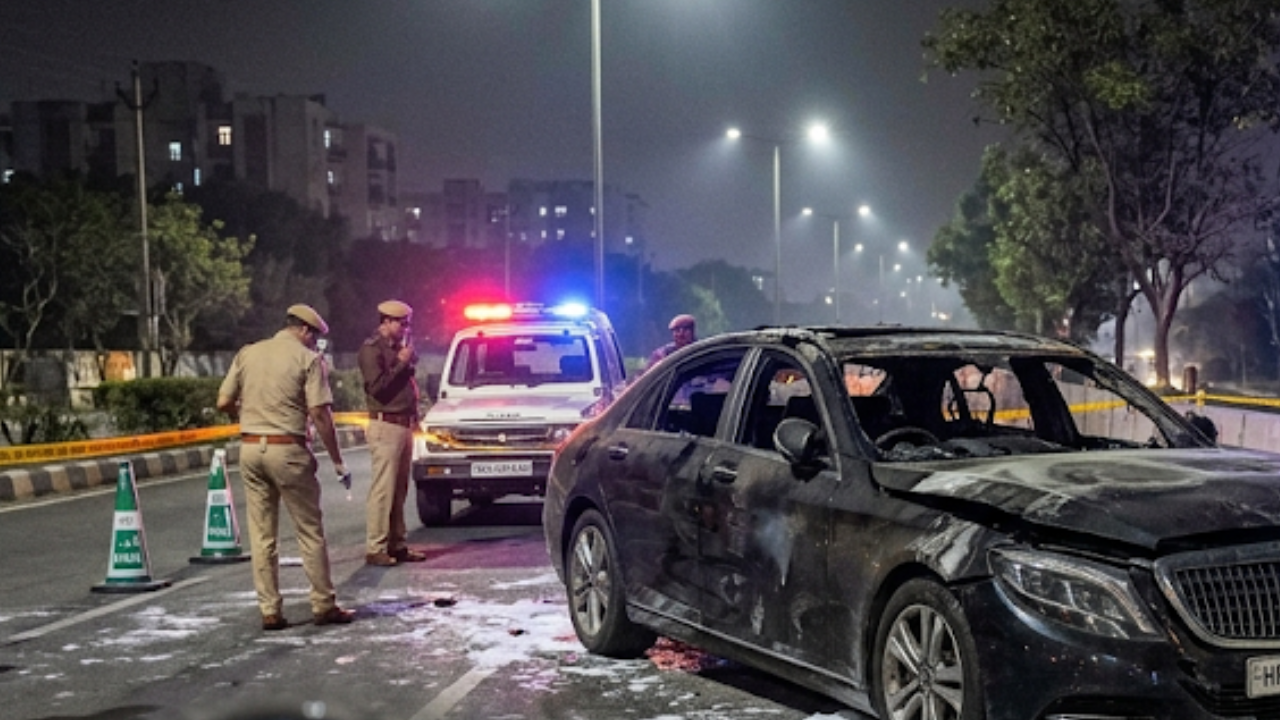
The concrete rupture in the festive calm was a high-speed collision that claimed the life of a young Gurgaon resident in the affluent Vasant Kunj neighborhood. The vehicle struck a wall at a recorded speed of 202 kmph, a velocity that turns a residential street into a lethal corridor. The chilling detail that the speed was captured on the victim's own Snapchat story underscores the casual normalization of extreme speeding among the urban elite. This is not merely a traffic accident; it is a manifestation of a culture that prioritizes speed and status over safety, resulting in a preventable death during one of the most significant festivals of the year.
The underlying tension lies in the persistent failure of urban planning and traffic enforcement to curb high-speed driving in densely populated areas. Despite the presence of speed limits and traffic police, the ability to reach such extreme velocities in a residential zone indicates a systemic breakdown in regulation. The friction between the desire for luxury and speed, often associated with high-end vehicles, and the need for public safety remains unresolved. The incident highlights the gap between the legal framework for traffic control and the actual behavior on the road, where the consequences of reckless driving are borne by the victims and their families, while the perpetrators often face minimal repercussions.
The downstream casualties of this tragedy extend beyond the immediate loss of life. The victim's family is left to grapple with the shock of a sudden, violent death, and the community is forced to confront the reality of living in an environment where such speeds are possible. The tangible outcome is a renewed call for stricter enforcement of speed limits and the implementation of physical barriers to prevent such high-speed incidents. However, without a fundamental shift in the culture of driving and the enforcement of traffic laws, similar tragedies are likely to recur, leaving a trail of grief and a persistent sense of insecurity in urban India.
Comments 0