Virginia and D.C. Challenge Trump Arch Construction in Federal Court
Virginia and the District of Columbia have filed a lawsuit to block the construction of the Trump arch, citing legal and procedural concerns. The case has been referred to a federal judge, who has ordered both sides to negotiate a briefing schedule, highlighting the growing legal battles over presidential monuments and federal authority.
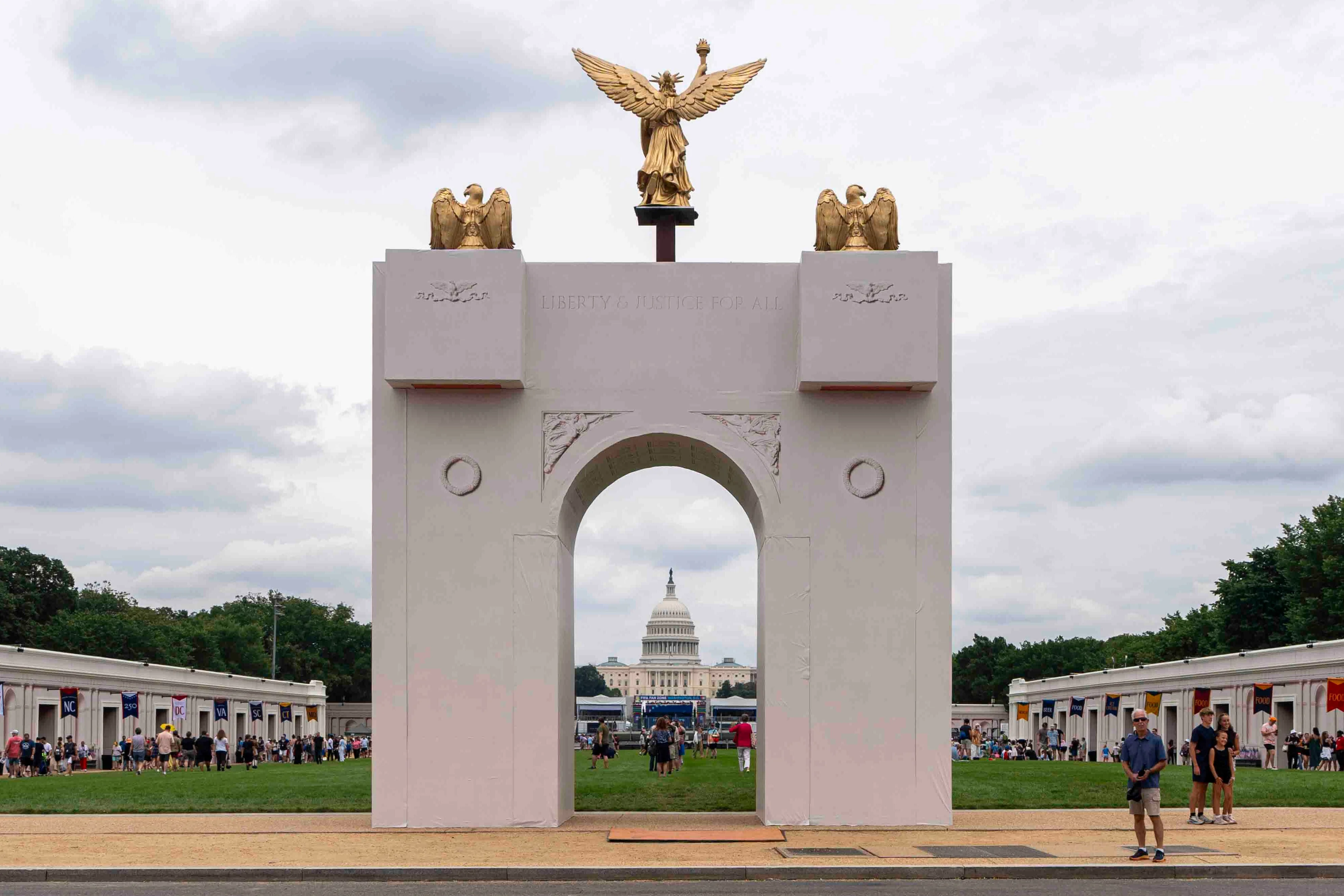
The concrete rupture in American legal and political discourse is the lawsuit filed by Virginia and the District of Columbia to block the construction of the Trump arch. This legal challenge represents a direct confrontation between state and local authorities and the federal government, with the arch serving as a symbol of presidential legacy and political power. The case has been referred to U.S. District Court Judge Tanya Chutkin, who has ordered both sides to engage in negotiations and agree on a proposed briefing schedule by Saturday evening. This procedural step underscores the seriousness of the legal dispute and the potential for a prolonged judicial battle over the construction of the monument.
The underlying tension in this case is the balance between federal authority and state sovereignty, particularly in matters of public space and political expression. The Trump arch, as a presidential monument, raises questions about the appropriate use of federal resources and the limits of executive power. The legal challenge by Virginia and D.C. reflects a broader trend of states and localities asserting their authority in areas traditionally dominated by the federal government. This institutional friction is exacerbated by the polarized political environment, where the arch is seen by some as a symbol of national unity and by others as an act of political self-aggrandizement. The legal battle is likely to test the boundaries of federal power and the rights of states to challenge federal projects.
The downstream consequences of this lawsuit are likely to be significant, with potential implications for future presidential monuments and federal construction projects. The tangible outcome of the case will depend on the court's interpretation of the relevant laws and the strength of the legal arguments presented by both sides. If the court rules in favor of Virginia and D.C., it could set a precedent for challenging other federal projects, potentially limiting the executive branch's ability to undertake large-scale construction initiatives. Conversely, a ruling in favor of the federal government could reinforce the authority of the executive branch and set a precedent for future presidential monuments. The case also highlights the growing role of the judiciary in resolving political disputes, as courts are increasingly called upon to adjudicate matters of public policy and political power.
Comments 0