West Bengal Records Surge in Late-Season Dengue Cases
West Bengal has reported a significant spike in dengue cases, with 5,500 new infections recorded in October, defying the typical seasonal decline. This late-season surge has strained healthcare resources and raised concerns about the efficacy of current vector control measures.
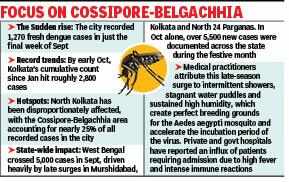
The dengue outbreak in West Bengal has taken an unexpected turn, with the state recording 5,500 new cases in October, a period when infections typically wane. This late-season surge has caught health authorities off guard, forcing a rapid reallocation of medical resources and intensifying vector control efforts. The persistence of the virus into the cooler months suggests a breakdown in the usual seasonal patterns, potentially linked to climate variability or lapses in public health interventions. The increase in cases has placed additional pressure on hospitals, which are already dealing with the aftermath of the peak season.
The underlying tension in this crisis lies in the gap between public health planning and the realities of climate change. Traditional models of disease prediction, based on historical data, are proving inadequate in the face of erratic weather patterns that extend the breeding season for Aedes mosquitoes. This mismatch has exposed vulnerabilities in the state's health infrastructure, which is not designed to handle prolonged outbreaks. The failure to contain the virus earlier in the season has now resulted in a secondary wave, complicating the response and increasing the risk of further spread.
The immediate consequence of this surge is a heightened sense of public anxiety and a potential erosion of trust in health authorities. The late-season nature of the outbreak has also raised questions about the effectiveness of current vector control strategies, which may need to be revised to account for changing climatic conditions. For the state government, the challenge is to manage the immediate health crisis while addressing the systemic issues that have allowed the outbreak to persist. The outcome will depend on the ability of health authorities to adapt their strategies and communicate effectively with the public.
Comments 0