Yamuna's Toxic Resurgence: Delhi's Air Quality Crisis Deepens Amidst GRAP Enforcement
The Yamuna river has resurfaced with visible signs of severe ecological collapse, manifesting as toxic white foam and unhealthy air quality across Delhi NCR. With the Air Quality Index hitting 168 and GRAP-1 curbs remaining in force, the capital faces a compounding public health emergency that exposes the failure of current environmental governance.
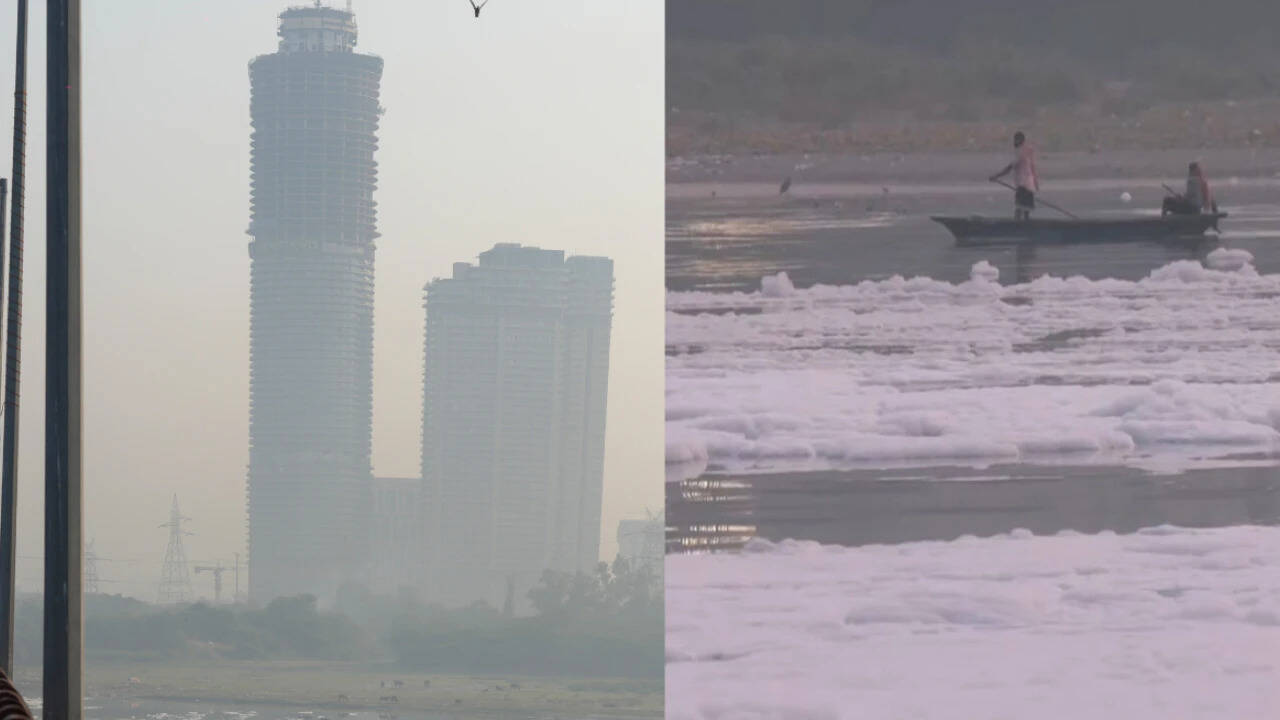
The visual evidence of the Yamuna's distress has become impossible to ignore as toxic white foam accumulates at Kalindi Kunj, a stark indicator of the river's biological death. This ecological rupture coincides with a sharp deterioration in atmospheric conditions, where the Air Quality Index in the Delhi NCR region has climbed to 168, placing the city in the unhealthy category. The simultaneous occurrence of water and air pollution creates a dual threat to the respiratory and cardiovascular health of millions of residents who rely on these fundamental natural resources for daily life.
The persistence of GRAP-1 curbs underscores the institutional inertia that characterizes the region's response to environmental degradation. Despite the implementation of graded restrictions on construction and industrial activity, the air quality has continued to worsen, suggesting that these measures are insufficient to counteract the cumulative impact of vehicular emissions, industrial discharge, and seasonal factors. The friction between regulatory intent and on-ground enforcement remains a critical point of failure, as the visible pollution of the river serves as a tangible reminder of the systemic neglect that has allowed the Yamuna to become a conduit for waste rather than a source of life.
The downstream consequences of this environmental failure are already manifesting in increased hospital admissions for respiratory ailments and a general decline in the quality of life for the capital's population. The toxic foam on the river's surface is not merely an aesthetic issue but a chemical warning sign that poses risks to aquatic life and potentially to the water supply infrastructure. As the crisis deepens, the pressure on local authorities to implement more stringent and effective pollution control measures intensifies, with the potential for broader economic and social disruptions if the situation is not addressed with urgency.
Comments 0