Architectural Conservation Meets Expansion: Chandigarh Revisions Heritage Master Plan
Chandigarh heritage authorities have approved modifications to the city master plan, opening new avenues for urban growth. The decision balances Le Corbusier's strict modernist design principles with the urgent demographic demands of a modern metropolis.
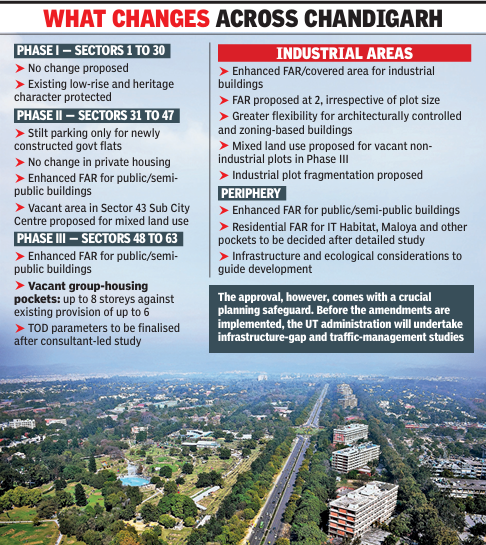
For decades, the architectural integrity of Chandigarh has been fiercely guarded by preservationists who viewed any structural alteration as a betrayal of its utopian modernist heritage. However, mounting population pressures and commercial expansion rendered the original zoning restrictions economically untenable. The heritage panel's recent clearance of master plan revisions represents a watershed moment, conceding that a living city must evolve beyond its museum-like origins. The administrative debate exposed deep divisions between urban planners prioritizing historical preservation and citizens demanding modern commercial flexibility. Strict height caps and zoning laws had previously driven real estate prices to unsustainable levels while pushing commercial activities into unauthorized suburban sprawls. The revised framework attempts to inject density into designated zones without destroying the iconic geometric sectors that define the union territory. Real estate markets within the region are already reacting to the relaxation of rules, with developers positioning capital for high-density commercial projects. The broader consequence will be a gradual transformation of the city's skyline, challenging purists who argue that incremental changes will erode its unique aesthetic identity. Chandigarh must now prove it can grow vertically without losing the green, orderly soul envisioned by its original creators.
Comments 0