Patient Assaults Night‑Shift Doctor in Kharar Civil Hospital
A patient at Kharar Civil Hospital in Punjab physically attacked a night‑shift doctor, dragging her by the hair and involving two additional staff members. The incident has ignited debate over hospital security and staff protection protocols. Authorities are reviewing safety measures amid concerns about patient‑staff relations in public health facilities.
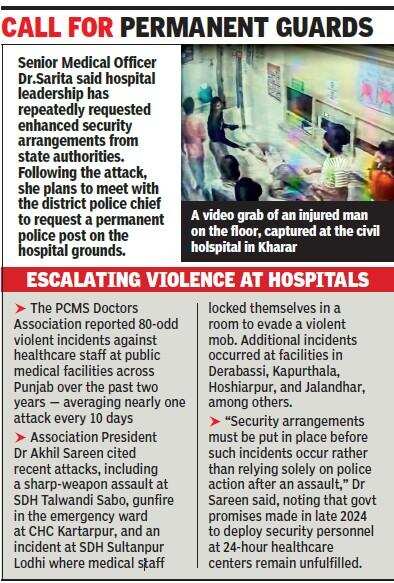
In the early hours of a recent night shift, a patient at Kharar Civil Hospital in Punjab became violent, seizing a female doctor by the hair and enlisting two other hospital employees to join the assault. The confrontation, captured in eyewitness accounts, escalated quickly, prompting immediate intervention by security personnel and local police. The victim sustained minor injuries but required medical attention, highlighting the vulnerability of healthcare workers operating in high‑stress environments with limited protective resources.
The episode has sparked a broader conversation about systemic shortcomings within public hospitals, where overcrowding, inadequate staffing, and insufficient security infrastructure often leave staff exposed to aggression. Hospital administrators acknowledge gaps in existing protocols, noting that many facilities lack dedicated security teams trained to de‑escalate volatile situations. Patient rights groups argue that while accountability for violent behaviour is essential, underlying issues such as long wait times and perceived neglect also fuel frustration, suggesting a need for holistic reforms that address both safety and service quality.
In response, the Punjab health department has announced an immediate review of safety standards, proposing the deployment of additional security staff, installation of surveillance systems, and mandatory training for all personnel on conflict resolution. If implemented effectively, these measures could restore confidence among medical professionals and reduce the likelihood of similar incidents. Over the coming year, the incident may serve as a catalyst for policy changes that strengthen protective mechanisms across the state’s public health network.
Comments 0