The Data Discrepancy: Chandigarh's Waste Management Crisis Meets Judicial Scrutiny
A conflict between Chandigarh's official waste data and high court filings has exposed a significant gap in the city's environmental governance. This discrepancy raises serious questions about the accuracy of the city's reporting and the effectiveness of its waste management systems, with potential legal and financial repercussions.
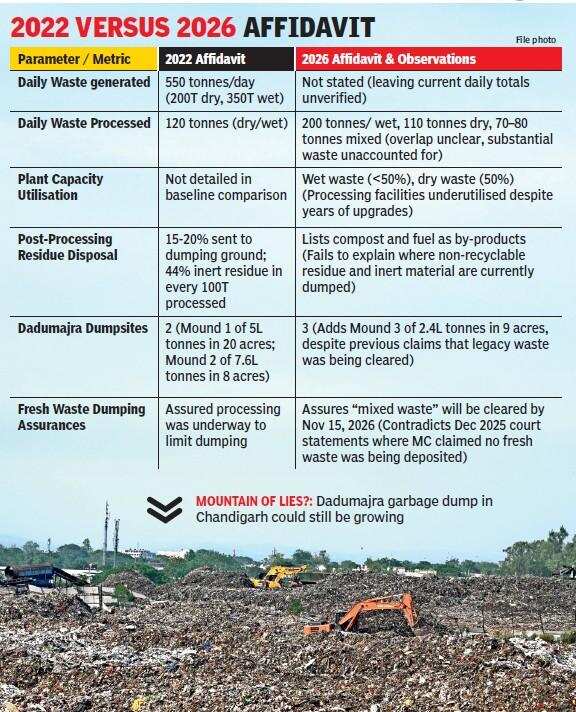
The city of Chandigarh is facing a significant challenge as its official waste data has been found to conflict with submissions made to the high court. This discrepancy has raised serious concerns about the accuracy of the city's environmental reporting and the effectiveness of its waste management infrastructure. The immediate shockwave is a loss of confidence in the city's ability to manage its waste, with potential legal and financial consequences. The high court is now likely to demand a more detailed and transparent accounting of the city's waste management practices, which could lead to a significant increase in oversight and regulation.
The underlying tension in this issue is the long-standing struggle of Indian cities to manage their waste effectively. Chandigarh, as a planned city, has always aspired to be a model of urban governance, but the discrepancy in its waste data suggests that it has not lived up to this reputation. The institutional friction is further compounded by the fact that waste management is a complex and often underfunded area of municipal governance, with multiple agencies and stakeholders involved. The conflict between the city's official data and the court filings highlights the lack of coordination and transparency in the city's environmental governance, which is a common problem in many Indian cities.
The downstream consequences of this discrepancy are likely to be significant. The immediate casualty is the city's reputation as a model of urban governance, which could have negative implications for its ability to attract investment and tourism. For the city administration, the incident presents an opportunity to reform its waste management systems and improve its data reporting practices. The structural consequence will be a greater emphasis on data integrity and transparency in municipal governance, with cities being held to a higher standard of accountability. This incident will also serve as a warning to other cities, which will need to ensure that their environmental data is accurate and consistent with their legal obligations.
Comments 0