Rajasthan High Court's Ruling on Minor Marriage and Trafficking Redefines Legal Boundaries
The Rajasthan High Court has suspended a sentence, ruling that the marriage of a minor alone does not constitute human trafficking without proof of monetary consideration. This decision has significant implications for the legal framework surrounding child marriage and trafficking in the state.
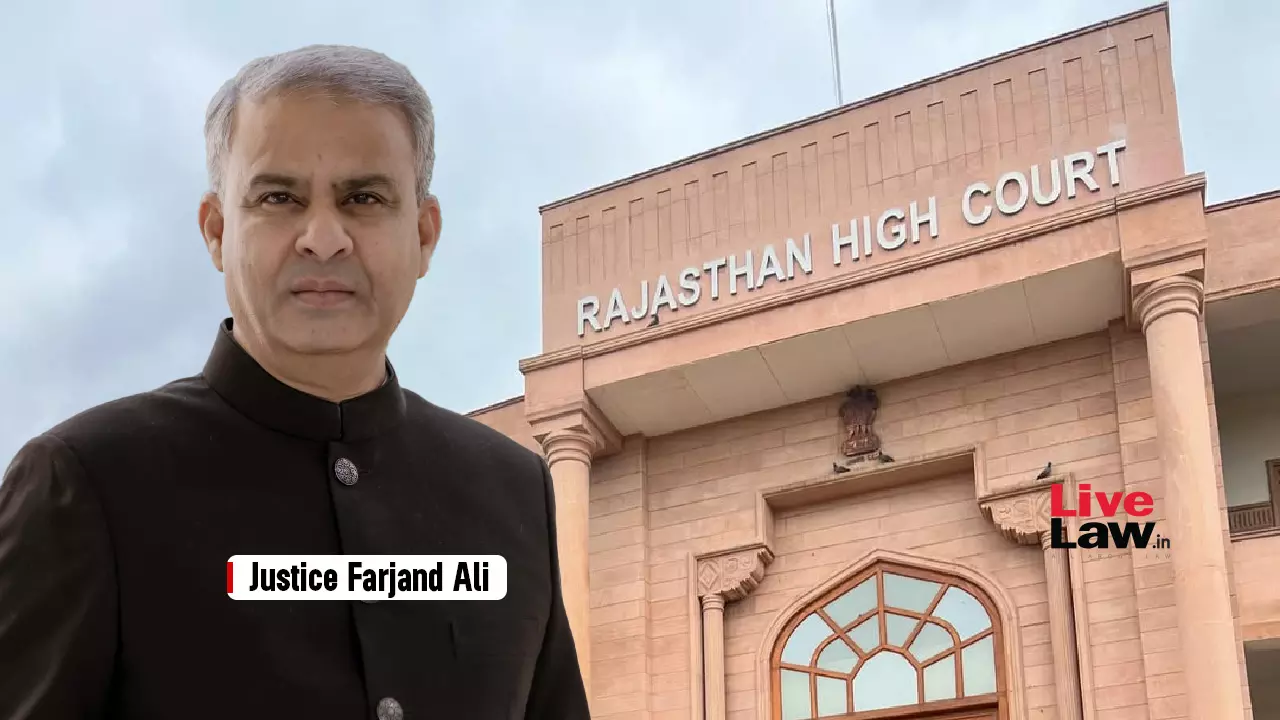
The concrete rupture in legal interpretation is the Rajasthan High Court's decision to suspend a sentence based on the argument that minor marriage does not automatically equate to human trafficking. The court's reasoning hinges on the absence of proof of monetary consideration, a distinction that has profound implications for how such cases are prosecuted and adjudicated. This ruling challenges the prevailing legal narrative that has often treated the marriage of minors as a form of trafficking, thereby creating a new legal standard that requires specific evidence of financial exchange.
The underlying tension lies in the conflict between the protective intent of anti trafficking laws and the specific legal definitions required for conviction. The institutional friction is evident in the debate over whether the act of marrying a minor, regardless of monetary gain, should be treated as a severe criminal offense. The court's decision reflects a more narrow interpretation of the law, which may be seen as a setback for those advocating for stricter enforcement against child marriage. The friction is also felt in the social and cultural context, where the practice of child marriage remains a persistent issue despite legal prohibitions.
The downstream casualties of this ruling include the potential for increased legal challenges in similar cases and a possible weakening of the deterrent effect of anti trafficking laws. The tangible outcome is a shift in the legal that may require legislative amendments to clarify the relationship between minor marriage and trafficking. The structural consequence is a more complex legal environment where the prosecution of such cases will require more detailed evidence, potentially making it harder to secure convictions and protect vulnerable minors.
Comments 0