Supreme Court Confronts Tamil Nadu Over Deepathoon Defiance
The apex court has issued a contempt notice to Tamil Nadu authorities for violating interim orders regarding the lighting of lamps at the Thiruparankundram temple. This judicial intervention marks a sharp escalation in the state's conflict with the central government over religious symbolism and constitutional authority.
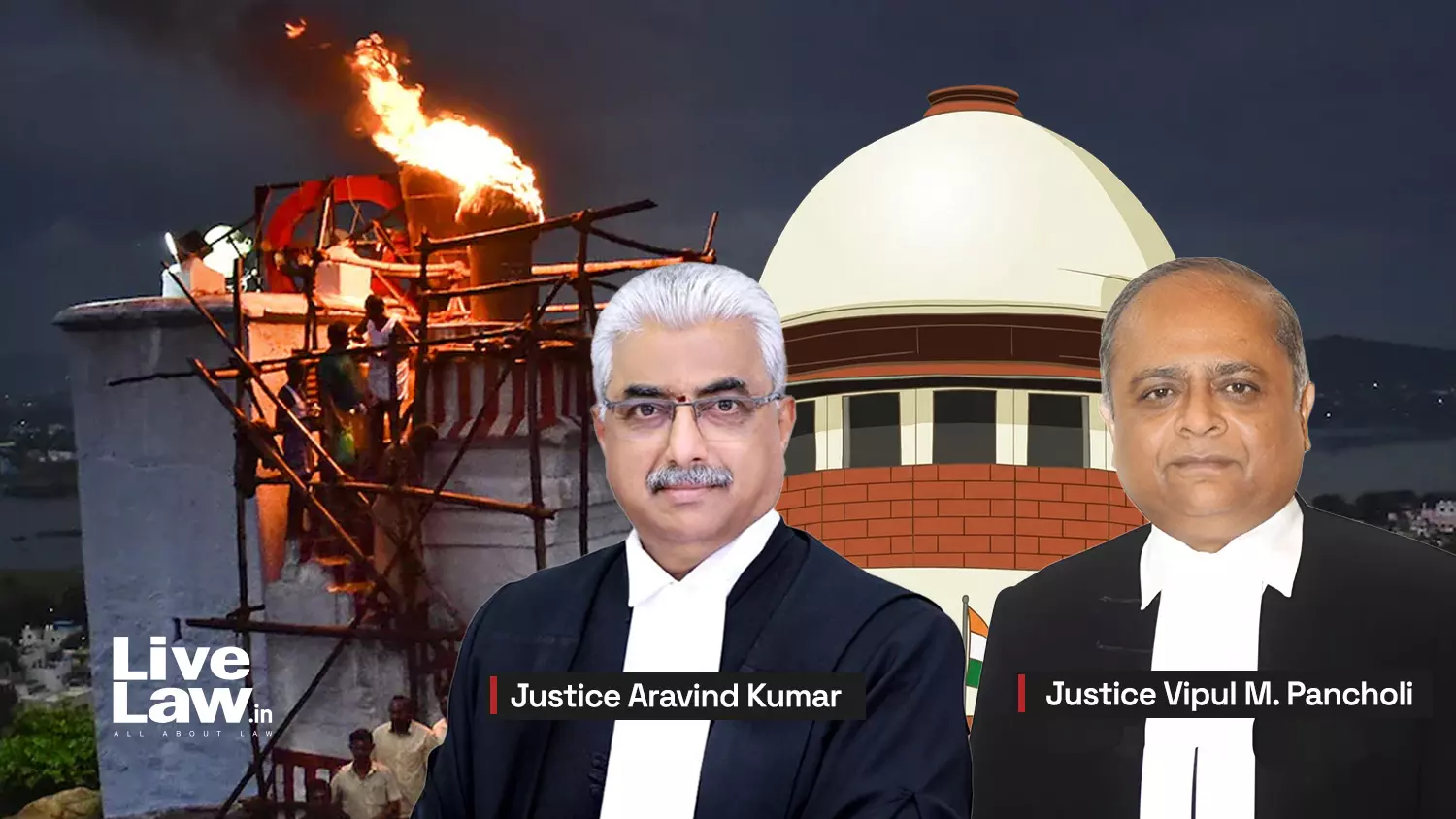
The Supreme Court of India has moved to enforce its prior directives by ordering the immediate lighting of lamps at the Thiruparankundram temple in Tamil Nadu. The bench, observing that state authorities had acted in brazen violation of the interim order, issued a contempt notice to the relevant officials. This action transforms a local religious dispute into a high-stakes constitutional confrontation, where the judiciary asserts its supremacy over state executive decisions that contravene court mandates. The immediate consequence is a direct challenge to the state government's autonomy in managing religious institutions, forcing a compliance that undermines their political stance.
The underlying tension stems from a broader friction between the central government's stance on religious symbols and the state's resistance to what it perceives as federal overreach. The Thiruparankundram issue has become a proxy for larger ideological battles, with the state government refusing to acknowledge the court's jurisdiction in matters it deems internal. This institutional friction highlights the growing difficulty in reconciling judicial pronouncements with political realities, where both sides are entrenched in a struggle for narrative control. The contempt notice serves not just as a legal tool but as a signal that the judiciary will not tolerate open defiance of its orders, regardless of the political sensitivity involved.
The downstream impact of this confrontation is a chilling effect on state-level governance and a potential precedent for judicial intervention in religious affairs. For the state government, the contempt notice carries the risk of personal liability for officials, creating a climate of fear that may stifle administrative decision-making. For the public, the episode deepens communal anxieties and polarizes opinion, as the dispute is framed in terms of identity and belonging. The tangible outcome is a strengthened role for the judiciary in mediating state-center conflicts, but at the cost of increased institutional distrust and a more volatile political environment in Tamil Nadu.
Comments 0